
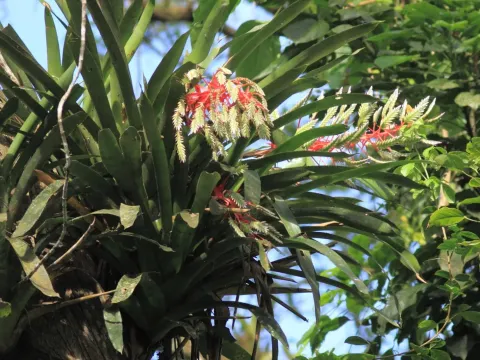
Aechmea dichlamydea
Aechmea dichlamydea
Aechmea dichlamydea is a fascinating perennial herbaceous plant belonging to the Bromeliaceae family. Native to the tropical regions of Central and South America, this species is well-adapted to humid forest environments, where it often grows as an epiphyte on trees, anchoring itself with a robust root system.
What the section contains
Aechmea dichlamydea
The plant features rigid, leathery leaves arranged in a tight basal rosette, which functions as an effective tank for capturing water and falling organic debris. Its most striking feature is the vibrant inflorescence, which provides long-lasting ornamental value, making it a prized specimen for botanical gardens.
Growing conditions for this species require consistent temperatures between 18 and 25 degrees Celsius, avoiding exposure to cold drafts. Bright, indirect light is essential for maintaining the intense coloration of the leaves and ensuring healthy development of the inflorescence during the active growth phase.
Soil requirements involve a highly porous, well-draining medium, similar to those used for other epiphytic bromeliads. A mixture of pine bark, peat moss, perlite, and charcoal is recommended to ensure adequate aeration around the roots and prevent waterlogging, which is detrimental to the plant's health.
In terms of economic and practical use, Aechmea dichlamydea is widely cultivated in the ornamental plant industry. It is highly sought after for indoor landscaping, corporate interiors, and conservatory displays due to its architectural form and ability to thrive in controlled environments with minimal structural maintenance.
Common pests affecting Aechmea dichlamydea include scale insects and mealybugs, which tend to congregate in the leaf axils. Regular inspection and cleaning of the foliage with a damp cloth can help manage minor infestations before they require more intensive chemical intervention.
Fungal pathogens and root rot are the primary threats, usually stemming from overwatering or stagnant water trapped in the central rosette during cooler periods. Providing proper air circulation and allowing the substrate to slightly dry out between waterings are the best preventive measures for long-term health.