
Aechmea caudata
Aechmea caudata Lindm.
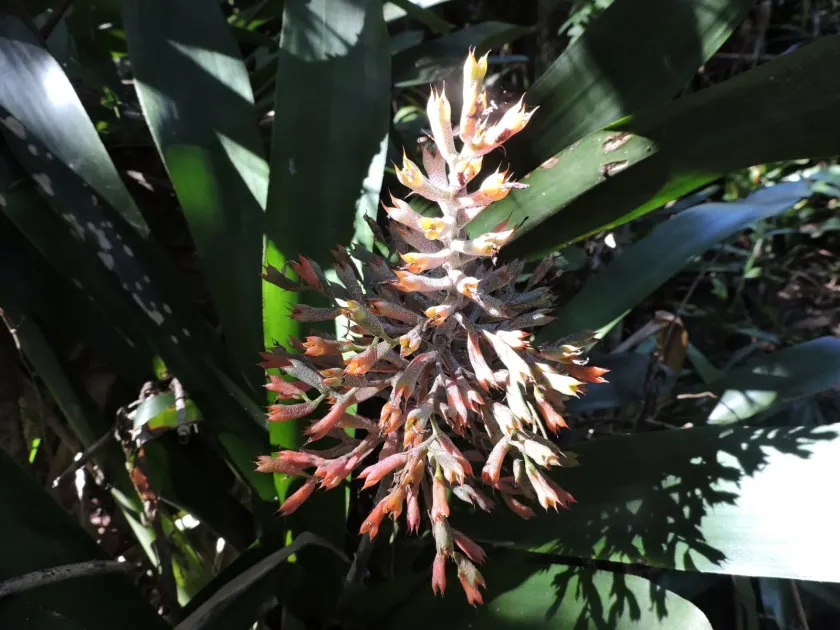
Description
Growing requirements
Aechmea caudata is a perennial epiphytic plant belonging to the Bromeliaceae family. Native to the rainforests of Brazil, it is characterized by its rosette-forming structure and typically grows on trees or rocky surfaces, relying on atmospheric moisture for survival.
The climate requirements for this culture are strictly tropical, necessitating bright but filtered sunlight to prevent leaf scorch. An ideal environment maintains high relative humidity levels, ideally above 60 percent, and stable temperatures ranging between 20 and 26 degrees Celsius throughout the year.
Regarding soil requirements, Aechmea caudata thrives in well-aerated, loose substrates that prevent root rot. Standard mixes include a combination of orchid bark, perlite, peat moss, and charcoal, which ensures optimal drainage and allows the epiphytic roots to access necessary oxygen.
Agrotechnical practices center on the tank-irrigation method, where water is primarily poured into the central leaf cup rather than the soil. It is crucial to utilize room-temperature, mineral-free water and to refresh the water in the rosette periodically to avoid bacterial buildup.
The primary use of Aechmea caudata is in the ornamental plant industry, specifically in landscape architecture, greenhouses, and conservatory displays. It is highly valued for its striking, long-lasting inflorescences and structural aesthetic in tropical-themed interior designs.
Main diseases and pests
Common pests affecting this species include mealybugs and scale insects. These pests tend to hide deep within the leaf bases, necessitating thorough and regular inspection of the central rosette and application of horticultural oils or systemic insecticides if infestations occur.
Pathogenic threats are usually related to improper irrigation and lack of airflow, leading to fungal pathogens such as Pythium or Phytophthora root rot. Maintaining a clean cultivation environment and ensuring the substrate is never waterlogged are the best preventative measures for this species.