
Aechmea eurycorymbus
Aechmea eurycorymbus Harms
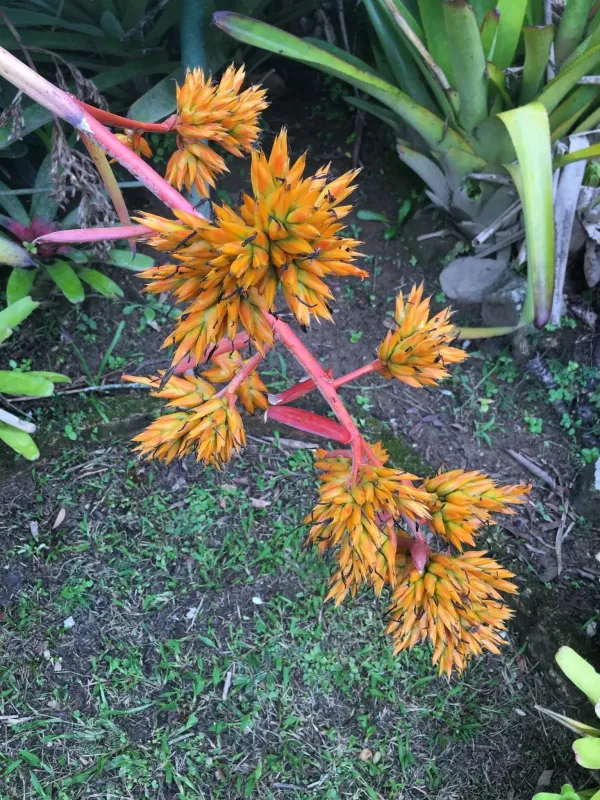
Description
Growing requirements
Aechmea eurycorymbus is a perennial epiphytic plant belonging to the Bromeliaceae family. Native to the tropical regions of South America, this species has evolved to thrive in high-humidity environments, utilizing its specialized structure to collect moisture from the air and rainfall.
Botanically, the plant forms a robust rosette of leathery leaves. The center of this rosette acts as a central reservoir, allowing the plant to store water and organic matter. This adaptation is essential for its survival in natural habitats where soil nutrients may be scarce.
To successfully cultivate this species, maintain temperatures between 20°C and 25°C. The plant requires bright, indirect light; excessive direct sunlight can scorch the leaves, while insufficient light leads to poor growth and loss of the plant's characteristic structural integrity.
The potting medium must be highly porous and well-draining. A suitable substrate mix includes peat moss, orchid bark, perlite, and charcoal. This composition ensures proper aeration for the root system and prevents waterlogging, which is critical for preventing physiological stress.
Watering should be directed primarily into the central rosette, using soft, dechlorinated water at room temperature. It is essential to ensure that the water is refreshed periodically to prevent bacterial growth and that the substrate does not remain constantly saturated to avoid root decay.
Main diseases and pests
Scale insects are a primary pest concern for Aechmea species. These pests attach themselves to the underside of the leaves, feeding on plant sap. Early detection and treatment with systemic insecticides or manual removal are necessary to prevent severe infestation.
Root rot, often caused by overwatering or poor drainage, is a common and serious threat. Symptoms include yellowing leaves and a softening of the base of the rosette. Proper soil management and adherence to dry-down periods are the primary preventative measures.
Mealybugs are frequently found hiding in the leaf axils, protected by a white, waxy substance. Regular inspection of these sheltered areas is important. Treatment typically involves using horticultural soaps or targeted systemic insecticides to ensure total eradication.
Spider mites can thrive in indoor environments with low humidity, causing stippling and yellowing on the foliage. Increasing local humidity and maintaining good air circulation are key preventative strategies to discourage these pests from establishing colonies.
Bacterial leaf spot can occur if water remains stagnant in the center of the rosette for too long, especially in cooler conditions. Maintaining good hygiene by cleaning the reservoir and ensuring adequate ventilation helps protect the plant from these pathogenic threats.