
Aechmea fasciata
Aechmea fasciata (Lindl.) Baker
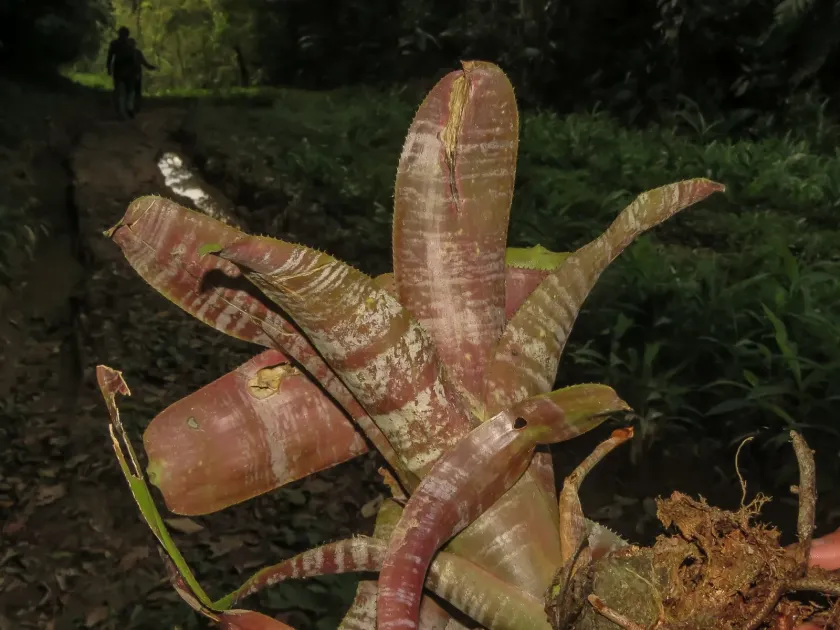
Description
Growing requirements
Aechmea fasciata, commonly known as the silver vase plant, is a striking member of the Bromeliaceae family. Native to the tropical rainforests of Brazil, this species grows primarily as an epiphyte, anchoring itself to trees and gathering water and nutrients through its central rosette.
The plant is distinguished by its broad, leathery, arching leaves that feature horizontal silvery-gray bands. The inflorescence is a spectacular, long-lasting pink spike with small blue flowers that eventually fade to a deep purple color, making it a highly valued ornamental crop.
For successful cultivation, the plant requires bright, filtered light and a stable temperature range of 20 to 25 degrees Celsius. Direct sunlight should be avoided to prevent foliar scorching, while good air circulation is essential to maintain the health of the leaf rosette.
The growing medium must be highly porous, well-draining, and acidic. A substrate consisting of peat, orchid bark, and perlite is ideal, as it mimics the natural environment of an epiphyte and prevents the root system from becoming waterlogged, which is critical for long-term growth.
The agrotechnical management involves watering the central tank of the rosette, ensuring the water is soft and at room temperature. During the cooler winter months, the irrigation frequency should be reduced, but maintaining ambient humidity through regular misting is recommended.
Main diseases and pests
The primary threats to Aechmea fasciata include fungal pathogens that emerge under conditions of excessive moisture and poor drainage. Rotting of the central rosette is the most common issue, which is often fatal if not caught early, highlighting the importance of proper water management.
Common pests include scale insects, mealybugs, and spider mites. These pests thrive in dry indoor conditions and can cause significant damage by feeding on the sap of the foliage. Regular inspection and the application of appropriate systemic pesticides are standard measures for ensuring plant health.