
Aechmea distichantha
Aechmea distichantha Lem.
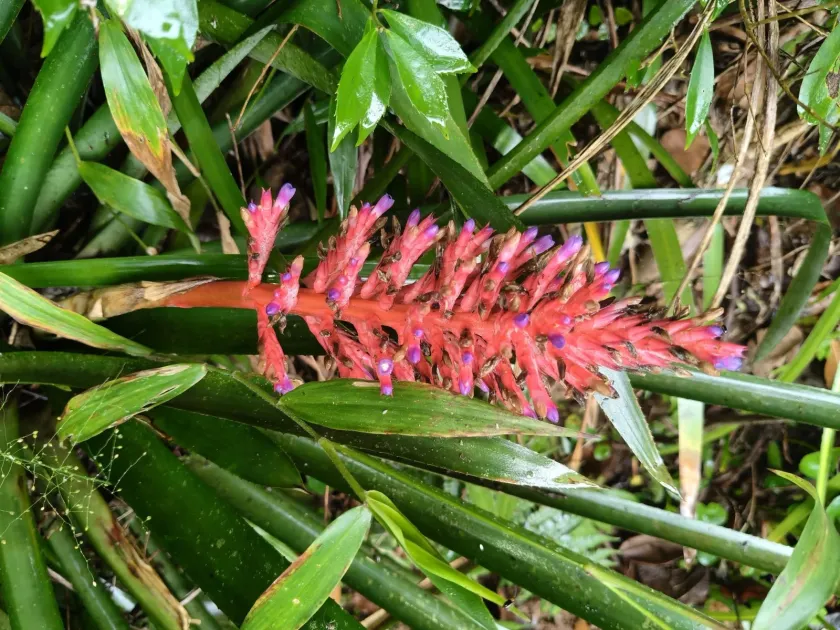
Description
Growing requirements
Aechmea distichantha is a robust perennial belonging to the Bromeliaceae family. Originating from the tropical and subtropical regions of South America, including Brazil and Argentina, it is well-regarded for its resilience and striking architectural form in both landscape and container cultivation.
Botanically, the plant features a rosette of stiff, spine-margined leaves capable of storing moisture. Its inflorescence is highly durable, displaying vibrant bracts that can remain attractive for several months, provided the plant receives adequate light and stable environmental conditions.
The culture requires bright, indirect light to thrive. While it can tolerate some morning sun, exposure to harsh afternoon rays should be avoided to prevent leaf scorch and dehydration. Proper placement ensures that the foliage retains its deep color and strong structure.
A well-draining, porous substrate is crucial for Aechmea distichantha. A mix consisting of peat moss, pine bark, and perlite or coarse sand provides the necessary aeration and moisture-retention balance required to prevent root-zone suffocation.
Temperature management plays a vital role in development. The plant prefers daytime temperatures between 20°C and 25°C, with slightly cooler nights. During the winter rest period, maintaining a cooler environment encourages the metabolic shifts necessary for flowering.
Main diseases and pests
Common pests associated with this species include mealybugs and scale insects. These organisms often colonize the hidden areas within the tight central rosette, making early detection and manual intervention essential to prevent severe infestations.
Root and crown rot are the most significant threats, typically occurring when the plant is kept in saturated soil or when water remains in the central rosette during cold, stagnant conditions. Prevention focuses on ensuring proper drainage and air circulation.
Chemical control involving systemic insecticides is effective against pests, but application must be handled with care to prevent runoff into the leaf cup. Organic solutions, such as neem oil diluted appropriately, can also be utilized for minor localized infestations.
Fungal infections, often manifested as leaf spots or stem decay, necessitate the use of systemic fungicides. Ensuring that the foliage dries out quickly after any overhead watering or misting helps mitigate the risk of pathogen outbreaks.
Regular maintenance practices, including the removal of dead or damaged outer leaves and ensuring the planting medium remains clean and free of organic debris, are the best methods to protect the plant from disease and pest pressure.