
Aechmea callichroma
Aechmea callichroma Read & Baensch
Description
Growing requirements
Aechmea callichroma is an elegant species within the Bromeliaceae family, native to the tropical forests of South America. As an epiphyte, it has evolved to thrive in high-humidity environments, typically attached to tree branches or rocky substrates where organic matter accumulates.
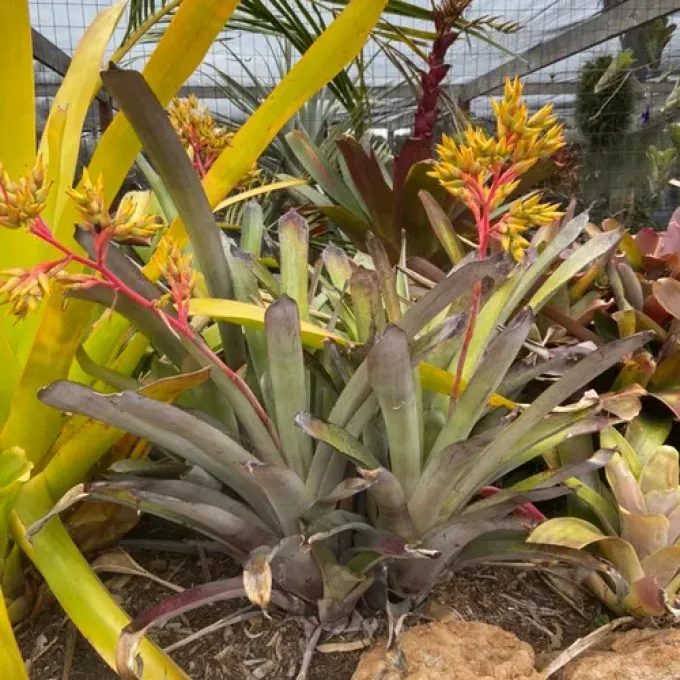
The botanical structure consists of a rosette of stiff, leathery leaves that form a central cup. This reservoir is highly functional, serving as a primary organ for water and nutrient absorption, which is a hallmark of many bromeliad species adapted to canopy life.
Optimal cultivation requires a warm climate with temperatures consistently between 18°C and 25°C. The species is sensitive to cold shock and should be protected from temperatures below 15°C, as these conditions significantly inhibit metabolic activity and growth.
For soil media, it is essential to use a mix that facilitates excellent drainage and aeration, such as orchid bark, perlite, and a small amount of peat moss. The goal is to mimic the well-drained, porous environments these plants occupy in their natural habitat.
Providing bright, indirect light is crucial for maintaining the plant's health and vibrant foliage colors. Exposure to harsh, direct sunlight will scorch the leaves, while insufficient light levels will lead to leggy, weak growth and hinder the development of the inflorescence.
Main diseases and pests
Mealybugs are one of the most common pests, often clustering deep within the leaf axils. Mechanical removal or targeted application of insecticidal soaps can manage these infestations if they are caught at an early stage.
Root rot is a prevalent issue caused by overwatering or poorly drained soil, leading to the collapse of the root system. Proper irrigation involves watering the soil sparingly and ensuring the cup remains clean and filled with fresh water rather than stagnant liquid.
Scale insects can also infest the leaves, feeding on sap and reducing the plant's vigor. Regular inspection of the underside of the leaves and the base of the rosette is necessary to identify and treat any early signs of pest activity effectively.
Fungal infections can develop when humidity is high and air circulation is poor, particularly during cooler months. Improving airflow around the plant is an effective cultural practice to mitigate the risk of leaf spotting and other fungal issues.
Spider mites may occasionally occur, especially in dry, indoor environments, causing fine webbing and stippling on the leaves. Increasing ambient humidity and periodic misting are effective ways to deter these pests and maintain the overall health of the plant.