
Aechmea calyculata
Aechmea calyculata (E. Morren) Baker
Description
Growing requirements
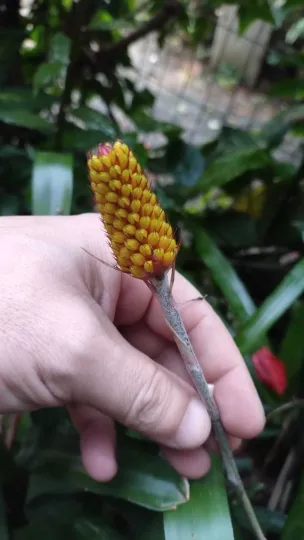
Aechmea calyculata is a species of flowering plant in the Bromeliaceae family. Originating from the tropical regions of South America, specifically Brazil and Argentina, it typically grows in humid forest environments as an epiphyte or a terrestrial plant.
The plant thrives in bright, indirect light. Direct sunlight can easily damage the foliage, leading to scorch marks, while insufficient light levels will hinder the development of the characteristic colorful inflorescence that is highly valued in horticulture.
The substrate must be well-draining, mimicking the natural environment of the plant. A mixture consisting of peat, pine bark, and perlite is often utilized by professionals to ensure that the root system has access to sufficient oxygen while retaining necessary moisture.
Temperature requirements are generally moderate, with an ideal range between 20 to 25 degrees Celsius. During the winter, it is crucial to protect the plant from cold drafts, as the species is sensitive to temperatures dropping below 15 degrees Celsius.
Watering techniques for this species are unique. Water is poured into the central tank or rosette formed by the leaves. It is essential to ensure that the water is fresh and of low mineral content to prevent mineral buildup and subsequent plant stress.
Main diseases and pests
The primary pests affecting Aechmea calyculata include scale insects and mealybugs. These pests hide in the leaf axils, making them difficult to detect early. Systematic insecticides are recommended for effective control of these infestations.
Root rot is a major threat caused by poor drainage or excessive watering. Once the roots begin to decay, it is often difficult to save the plant, emphasizing the need for a preventive approach with a coarse, porous potting medium.
Spider mites may colonize the plant if the ambient humidity is kept too low. Regular misting and maintaining proper air moisture levels are effective strategies to prevent the proliferation of these pests in a cultivation environment.
Fungal leaf spot diseases can occur if water remains on the leaves for too long in poorly ventilated areas. Keeping the foliage dry, apart from the central rosette, helps in reducing the incidence of these pathogens.
Improper nutrient management can lead to chlorosis, where the leaves lose their vibrant color. A balanced, water-soluble fertilizer specifically formulated for bromeliads should be applied at a diluted strength during the growing season.