
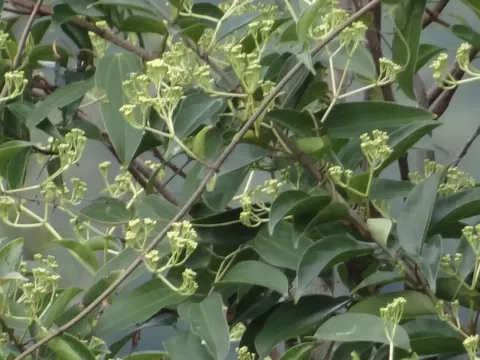
Urceola
Urceola
Urceola is a genus of woody vines belonging to the Apocynaceae family. These plants are native to the tropical regions of Southeast Asia, including countries like Thailand, Malaysia, and Indonesia, where they thrive in diverse rainforest ecosystems.
What the section contains


Urceola
The plant requires a consistent tropical climate characterized by high temperatures and humidity throughout the year. It naturally grows under a dense canopy that provides dappled light, shielding the vines from the intensity of direct tropical sunlight.
Soil requirements for Urceola involve nutrient-rich substrates with excellent drainage. The plant is highly sensitive to waterlogging, necessitating well-drained slopes or riverside areas with light, permeable soil structures to prevent root decay.
Botanically, Urceola is defined by its strong, climbing stems that anchor to larger host trees to reach the upper canopy levels. The leaves are typically opposite, entire, and possess a leathery texture, which is an evolutionary adaptation to moisture retention.
The historical economic importance of Urceola lies in its latex production. The milky sap found within the plant's tissues can be processed into natural rubber, a characteristic that made it a significant resource for local traditional harvesting in the past.
Pathogenic fungal infections represent a major threat to Urceola, especially in environments where extreme moisture levels persist. Root rot is a common issue that arises when the plant is grown in soil lacking proper drainage or airflow.
Common tropical pests, such as scale insects and mealybugs, frequently infest the vine. These pests extract sap from the foliage, causing significant leaf deformation and a general weakening of the plant's overall physiological defense mechanisms.
Leaf-eating insects can significantly reduce the photosynthetic capacity of the vine. In some instances, these infestations are compounded by the appearance of sooty mold, which grows on the honeydew excreted by the sap-sucking pests.
Human activities, particularly large-scale deforestation, pose the greatest existential risk to wild Urceola populations. The destruction of host trees alters the local microclimate, leaving the vines exposed to harsh sunlight and drying winds.
Managing the health of the culture requires strict moisture monitoring and appropriate planting density. In plantation settings, biological control methods are highly recommended to avoid chemical interference with the quality of the harvested latex.