
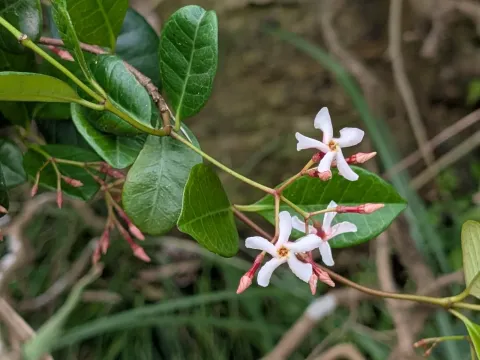
Trachelospermum
Trachelospermum
Trachelospermum, commonly known as star jasmine, belongs to the Apocynaceae family. It is a robust evergreen woody vine noted for its glossy foliage and highly fragrant white flowers that bloom in late spring and early summer.
What the section contains


Trachelospermum
The genus originates from East and Southeast Asia, thriving in regions with subtropical or temperate climates. In cultivation, it serves as a decorative climber for trellises, fences, or walls, but it can also be utilized as a dense groundcover in warmer zones.
Optimal growth requires well-drained, nutrient-rich soil with a neutral to slightly acidic pH. The plant performs best in locations that offer full sun to partial shade, though protection from intense heat and drying winds is necessary to maintain leaf vigor.
Water management is critical; while established plants show moderate drought tolerance, regular irrigation is essential during the initial growth stages and prolonged dry periods. The root system must never remain waterlogged, necessitating careful drainage planning.
Pruning is an important part of the management cycle, usually performed after the primary flowering period. It helps maintain the desired shape and prevents the vine from becoming woody and sparse at the base, encouraging fresh, dense growth for the following season.
Spider mites are the most prevalent pests affecting Trachelospermum, particularly in environments with low humidity. These pests thrive under warm, dry conditions and can cause significant foliage discoloration if not managed with timely acaricide applications.
Scale insects and mealybugs can also infest the stems and undersides of leaves, extracting sap and reducing the overall vigor of the plant. Monitoring and manual removal or systematic insecticidal soap treatments are effective control measures.
Root rot remains the most significant physiological threat, typically resulting from poor soil aeration or excessive watering. Ensuring that the substrate remains loose and porous is the primary preventative measure against these fungal pathogens.
Chlorosis, indicated by yellowing leaves with green veins, suggests an imbalance in soil pH or a deficiency in iron or manganese. Addressing soil chemistry through appropriate fertilization can effectively restore plant health and leaf color.
Regular sanitation, such as the removal of dead or crossing branches, reduces the microhabitats where pests and pathogens congregate, promoting a healthier and more resilient plant structure throughout the year.