
Vallaris
Vallaris
Vallaris is a genus of evergreen woody vines belonging to the Apocynaceae family. Originating from tropical Asia, these plants are naturally adapted to the lush conditions of forest edges and humid valleys, where they utilize structural support to reach sunlight.
What the section contains


Vallaris
The culture requires a tropical or subtropical climate to thrive, characterized by consistent warmth and humidity throughout the growing season. The ideal soil for Vallaris is well-drained, nutrient-rich loam that prevents waterlogging while providing essential minerals for foliage development.
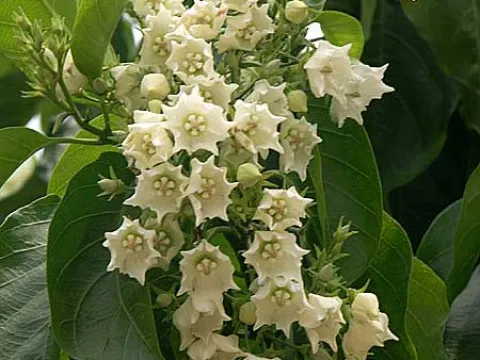
Botanically, Vallaris is distinguished by its leathery, opposite leaves and clusters of fragrant, trumpet-shaped flowers. The vine nature of the plant allows it to cover large vertical areas, making it a robust climbing species in its native ecosystem.
Agrotechnical practices involve consistent watering, especially during peak growth months, and the installation of sturdy trellises or supports. In cooler zones, Vallaris is exclusively grown in greenhouses, as it cannot survive frost and requires protection from extreme temperature drops.
The primary economic and horticultural use of Vallaris is in ornamental landscaping. It is highly valued for vertical gardening, as its rapid growth and fragrant blossoms make it an excellent choice for screening, covering pergolas, or enhancing garden wall aesthetics.
The most significant threat to Vallaris is soil-borne disease resulting from improper moisture management. Overwatering and poor aeration lead to root rot, which is often fatal if not diagnosed and corrected early through immediate repotting and soil amendment.
Common pests include spider mites and scale insects, which thrive in protected greenhouse environments where air circulation may be limited. Integrated pest management, involving regular leaf washing and the judicious use of horticultural oils, is essential to keep the vines healthy.