
Delosperma cooperi
Delosperma cooperi (Hook. f.) L. Bolus
Description
Growing requirements
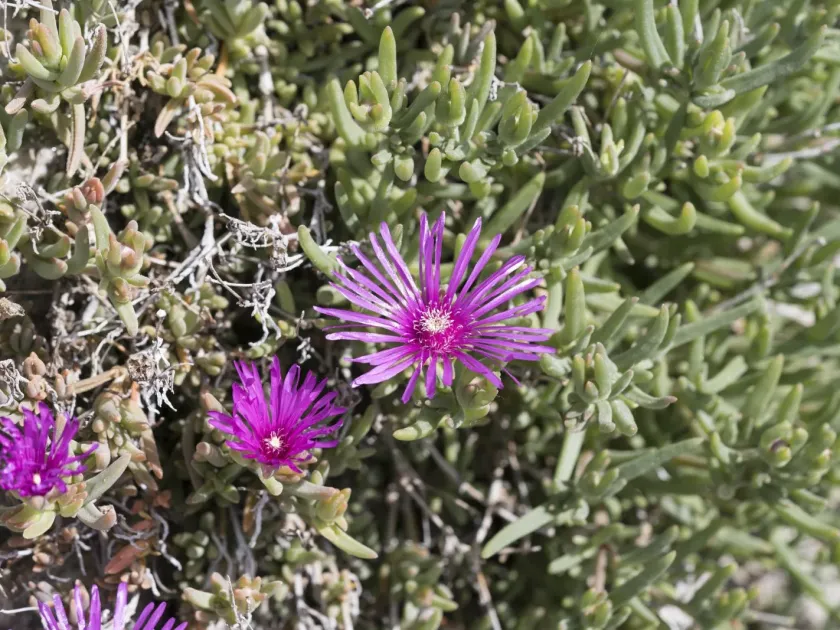
Delosperma cooperi is a perennial succulent plant belonging to the Aizoaceae family. Originating from South Africa, it is widely valued for its trailing growth habit and brilliant floral display.
The plant features succulent, needle-like foliage that stays evergreen in frost-free climates. Its most striking characteristic is the abundance of daisy-like flowers, which cover the plant during the summer months.
Optimal growth requires full sun exposure. The plant relies on high light intensity to trigger flower opening and maintain a dense, compact form, preventing the stems from becoming leggy.
Soil requirements are centered around drainage. It thrives in gritty, sandy, or rocky soil compositions where excess water can move away from the roots instantly, as this species is prone to rot.
In agricultural and landscaping contexts, it is used for xeriscaping and stabilizing slopes, as it provides excellent ground coverage and maintains soil integrity without the need for supplemental irrigation.
Main diseases and pests
The primary threat to Delosperma cooperi is waterlogged soil. Prolonged wet conditions, especially during winter months, cause root and crown rot, which are often fatal to the plant.
Mealybugs are the most persistent pest for this species. They hide in the crevices between fleshy leaves, and their feeding can stunt growth and invite secondary fungal infections.
Grey mold (Botrytis) represents a significant fungal challenge. It typically develops in stagnant air conditions or during unseasonably wet seasons, requiring immediate removal of infected stems.
Aphids can cause damage to developing flower buds, resulting in deformed petals. Regular inspection is recommended, especially in spring when the plants are entering their peak growth phase.
Slugs and snails can consume the succulent stems if the environment is overly moist. Using organic-approved barriers or bait is effective for managing these pests in garden beds.