
Delosperma floribundum
Delosperma floribundum L.Bolus
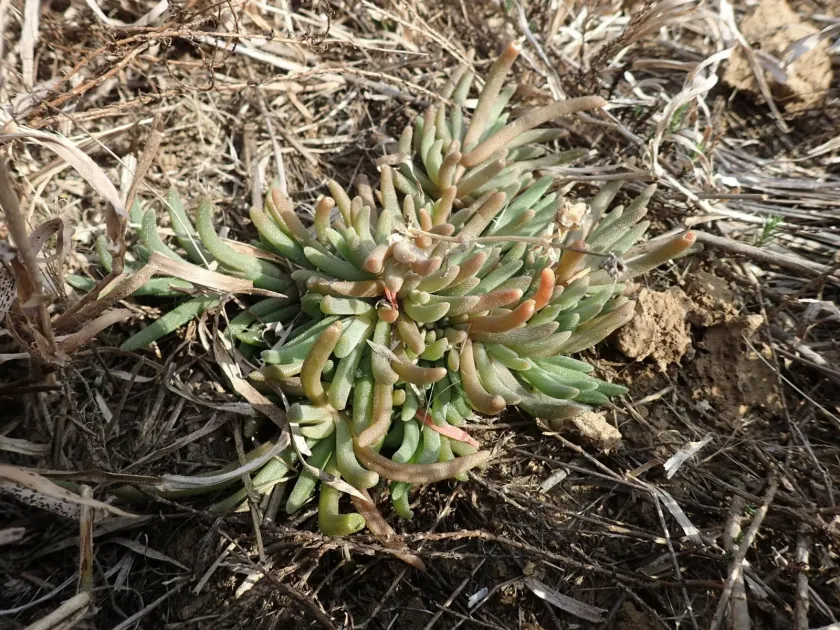
Description
Sowing dates
Delosperma floribundum belongs to the Aizoaceae family. For commercial or decorative purposes, seeds are sown in late winter or early spring, approximately 8 to 10 weeks before the last expected frost date.
The seeds are extremely small; therefore, they should not be buried deep. It is best to sprinkle them over the surface of moist substrate and press them gently, ensuring high light levels to facilitate germination.
To accelerate sprouting, cover the containers with clear plastic to create a mini-greenhouse effect. Maintain the temperature during this period between +20 and +22 degrees Celsius.
Once true leaves appear, remove the cover and move the containers to a cooler, well-lit location. Prick out the seedlings after the second pair of true leaves has formed, using individual pots for further development.
Transplant into the open ground only after temperatures have stabilized and the risk of frost has passed, as young plants are quite sensitive to extreme cold.
Growing requirements
This species is a classic succulent that requires maximum sunlight throughout the day. In shaded areas, the plant loses its aesthetic appeal, becomes leggy, and stops blooming prolifically.
Soil requirements focus on providing excellent drainage. Delosperma cannot tolerate waterlogging; therefore, on heavy clay soils, it is necessary to incorporate a layer of gravel or sand.
The ideal substrate is poor, sandy, or stony soil with a neutral or slightly acidic pH. Excessive organic fertilizer can lead to root rot and promote excessive vegetative growth at the expense of floral display.
Watering should be strictly moderate, allowing the top layer of soil to dry out between applications. Mature plants are quite drought-tolerant due to their ability to store moisture in fleshy leaves.
For successful overwintering in regions with harsh climates, reliable protection using dry leaves or evergreen boughs is required, along with protection from winter dampness, which is more harmful than moderate cold.
Yield
The economic use of Delosperma is focused primarily on the ornamental plant sector. It is highly valued as a ground cover plant capable of quickly forming dense carpets of foliage and flowers.
The flowering period is exceptionally long and vibrant, making it popular in landscape design for decorating alpine rock gardens, rockeries, and retaining walls.
Yield in this context is measured by the plant's ability to cover a specific area and the intensity of its blooming. With proper care, a single clump can produce hundreds of buds throughout the season.
The culture can also be grown in containers and balcony boxes, demonstrating high adaptability to limited soil volumes as long as quality drainage is maintained.
Seed production is prolific, allowing for efficient large-scale propagation for sale to home gardeners and professional landscaping companies.
Main diseases and pests
The primary threat to this plant is excessive moisture, which triggers various root rots. If symptoms appear, immediately reduce watering and replace the affected soil.
Among pests, mealybugs pose the greatest danger, often hiding in the axils of the fleshy leaves. Combat them using systemic insecticides or by wiping the leaves with an alcohol solution.
In greenhouses or conditions of high humidity, aphids may appear, sucking sap from young shoots. Regular inspection of the plants is essential for early detection.
Root-knot nematodes can also damage the root system, inhibiting growth. Prevent this by using sterilized substrate for seedlings and avoiding water stagnation.
Slugs and snails may damage the tender parts of the plant during rainy weather. Using gravel barriers or specialized granular baits helps effectively minimize damage from these pests.