
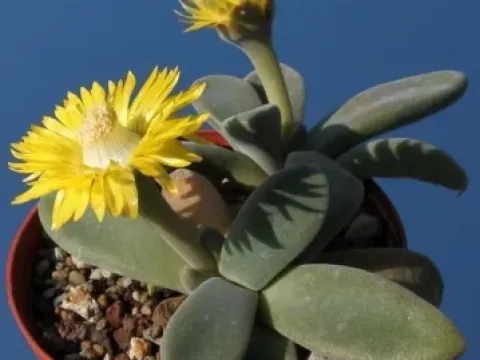
Deilanthe
Deilanthe
Deilanthe is a genus of succulent plants belonging to the Aizoaceae family, native to the arid landscapes of Southern Africa. These plants are highly adapted to survival in harsh environments with irregular rainfall patterns and extreme soil conditions.
What the section contains
Deilanthe
Cultivation of Deilanthe requires very specific conditions, primarily focusing on intense sunlight. Exposure to direct light is essential to prevent etiolation, which is the stretching and weakening of the plant's structure due to insufficient light levels.
The growing medium must be highly porous and inorganic. A professional substrate for Deilanthe should consist of a mix of sand, pumice, and minimal organic matter to ensure rapid drainage and prevent water accumulation around the sensitive roots.
Temperature management is a key aspect of their life cycle. They require warmer days during the growing season and cooler temperatures during the winter dormancy period to stimulate normal physiological processes.
Watering practices are the most critical element of the plant's husbandry. One should only water the plant when the growing medium is completely dry, and it is imperative to withhold water almost entirely during the dormant phase.
Root rot remains the most significant threat to the survival of Deilanthe. It is almost exclusively caused by overwatering or the use of heavy, water-retaining soil that suffocates the root system.
Mealybugs are the primary pest concern for this genus. These small insects cluster in the crevices between leaves, making them difficult to detect and eradicate without close inspection.
Spider mites may occasionally infest the plants if the ambient humidity is too low and airflow is stagnant, leading to yellowing or deformed leaf growth.
Fungal infections can quickly spread if the plant sustains physical injury or if water is left on the leaves for extended periods in cooler environments.
The best strategy for mitigating threats is to mimic the natural desert environment, focusing on proper ventilation and strictly regulated moisture levels to maintain the plant's inherent resistance.