
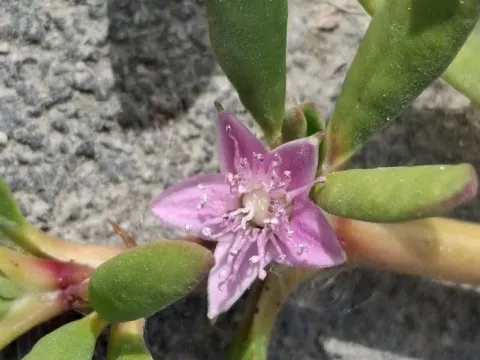
Cypselea
Cypselea
Cypselea is not a traditional agricultural crop, so there are no standardized commercial sowing schedules established for this genus.
What the section contains
Cypselea
In ornamental cultivation, seeds are sown during the spring season to ensure stable temperatures and adequate daylight hours for germination.
Given the minute size of the seeds, they are scattered on the surface of a porous, well-draining substrate and must not be buried deeply.
Light is essential for the germination process, so maintaining high exposure to natural light is a critical requirement for seedling development.
A consistent moisture level should be maintained in the growing medium during the first few weeks to support the initial growth phase of the seedlings.
Cypselea is a genus within the Aizoaceae family, consisting of succulent herbs adapted to specific environmental niches in the Caribbean region.
The native habitat includes areas of Hispaniola and Puerto Rico, where these plants typically thrive on sandy, well-drained rocky soils.
These plants require full sun exposure to maintain their compact structure and healthy coloration, as they are heliophilic by nature.
Soil composition must be highly inorganic, featuring a significant percentage of grit or coarse sand to facilitate rapid drainage and prevent root rot.
Temperature requirements for optimal growth are generally warm, reflecting the tropical conditions of the plant's native distribution.
The primary threat to Cypselea is the over-saturation of the substrate, which rapidly leads to lethal root rot caused by various soil-borne pathogens.
Mealybugs are known to infest the succulent leaves, causing damage and weakening the plant if not addressed with appropriate biological or chemical controls.
Spider mites represent a frequent pest concern, particularly in indoor environments with low humidity and high temperatures during the summer months.
Poor ventilation and stagnant air combined with high humidity create ideal conditions for fungal leaf spots that can compromise the plant's health.
Preventive care is essential, focusing on sterile soil mixes, controlled irrigation cycles, and maintaining proper air movement around the plant foliage.