
Didymaotus
Didymaotus
Description
Growing requirements
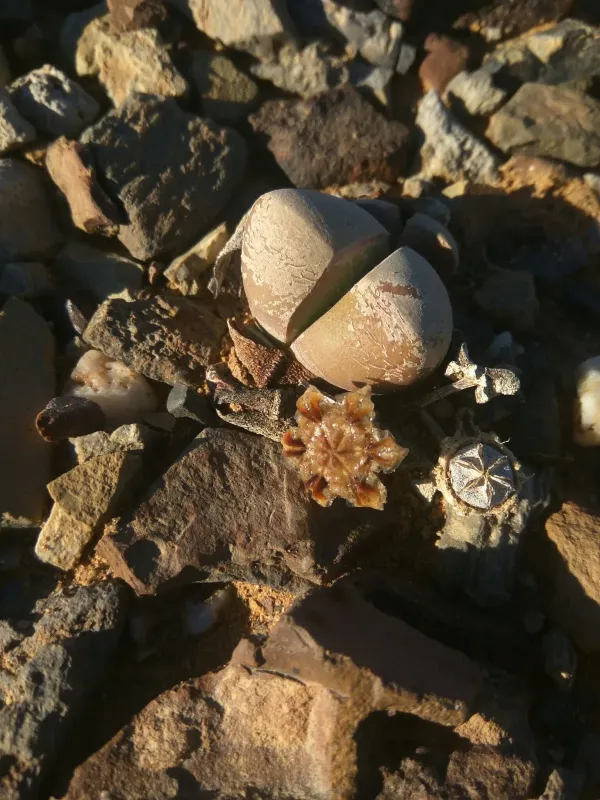
Didymaotus is a monotypic genus of succulent plants within the Aizoaceae family, native to the arid regions of South Africa. The species, known scientifically as Didymaotus lapidiformis, is highly specialized to survive in extreme desert environments.
Botanically, the plant is characterized by its stone-like appearance, consisting of fleshy, paired leaves that provide a perfect camouflage. This adaptation is a survival mechanism against herbivores seeking moisture in the harsh, dry climate of the Cape province.
Cultivation of Didymaotus requires a strictly mineral, fast-draining substrate with almost no organic matter. It thrives in conditions that provide intense sunlight and high thermal variance between day and night, similar to its natural habitat.
Watering must be managed with extreme caution, adhering to a strict seasonal cycle. Providing water during the dormant winter period is the most common mistake, as it inevitably leads to rot, which is the primary cause of failure in cultivating this species.
In terms of usage, Didymaotus is strictly an ornamental crop, prized primarily by succulent collectors. Due to its slow growth rate and specific care requirements, it remains a specialty item in the world of greenhouse and container horticulture.
Main diseases and pests
The main threat to Didymaotus is root rot caused by improper watering and lack of drainage. The succulent tissue is highly susceptible to decay if the plant remains wet for even a short period during its dormant phase.
Pests like mealybugs can infest the plant, hiding in the crevices between leaves. Effective control requires gentle removal or the use of systemic insecticides that are safe for highly sensitive succulent species.
Poor ventilation promotes the development of fungal pathogens, which can cause soft rot in the leaves. Ensuring constant airflow around the plant is essential to prevent these diseases from taking hold.
Etiolation caused by low light conditions results in weak, unattractive growth. Once a plant has stretched, it loses its characteristic appearance and becomes significantly more vulnerable to mechanical damage and subsequent infection.
Prevention is the best strategy for managing the health of Didymaotus. This includes careful monitoring for pests, ensuring a sterile growing environment, and avoiding any unnecessary handling of the delicate plant body.