
Carpobrotus mellei
Carpobrotus mellei
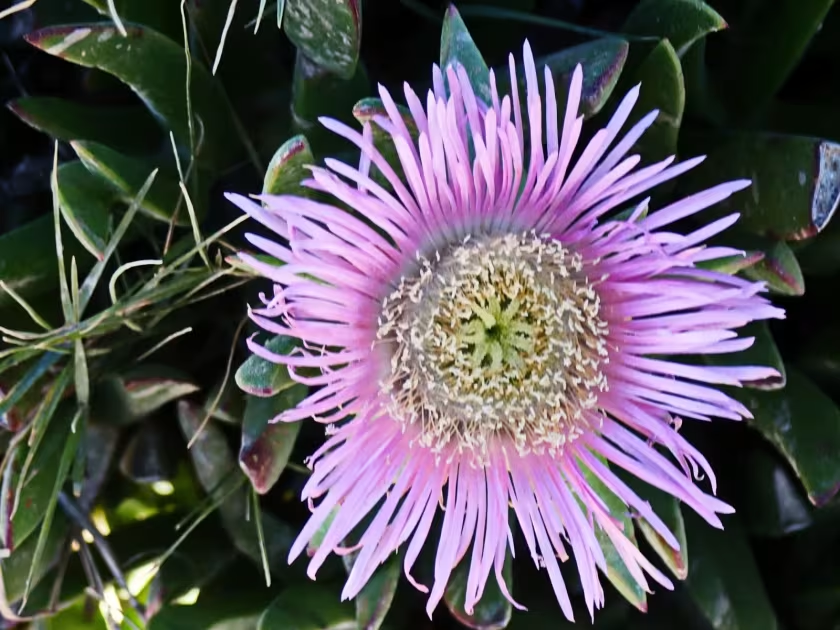
Description
Growing requirements
Carpobrotus mellei is a perennial succulent plant belonging to the Aizoaceae family. Originating from the arid regions of Southern Africa, it has evolved unique survival mechanisms to thrive in environments with minimal rainfall and high solar radiation.
The botanical structure of the plant features succulent, triangular leaves that function as moisture reservoirs. Its trailing stems possess the ability to root at the nodes, creating a dense, spreading mat that protects the soil surface from wind and water erosion.
To successfully cultivate this species, full sunlight exposure is non-negotiable. Insufficient light results in etiolated growth, reduced bloom density, and increased susceptibility to various physiological disorders typical of succulents kept in suboptimal conditions.
The soil requirement is strictly based on high drainage capacity. Sandy or gritty substrates are preferred, as they mimic the natural habitat. Heavy, clay-rich soils lead to root rot and crown decay, which are the most common failures in cultivation attempts.
Climatically, Carpobrotus mellei thrives in regions without severe frosts. It is highly tolerant of saline environments, making it a reliable choice for coastal landscaping where salt spray and sandy soils limit the range of available plant species.
Harvesting
The agricultural and ornamental use of Carpobrotus mellei is primarily centered on its rapid ground-covering capabilities. It serves as an effective soil stabilizer, preventing desertification and wind erosion in degraded, arid landscapes.
The fruit of this plant is known for its sweet, honey-like flavor. Harvested when fully ripe, the fruits provide a source of nutrition, though their shelf life is limited due to high sugar and moisture content, necessitating rapid processing or consumption.
Harvesting is typically performed manually. Since the plant produces fruits over an extended period, multiple picking rounds are often required. Careful handling is necessary to ensure the integrity of the succulent stems and leaves during the collection process.
In addition to its edible properties, the plant is valued for its potential in secondary industries, including the extraction of compounds for specialized uses. Its low maintenance requirements post-establishment make it an economical choice for managed landscapes.
For ornamental plantations, harvesting refers to the removal of excessive growth to maintain the desired area boundaries. Seasonal thinning ensures that the plant remains vigorous and continues to produce healthy, fleshy foliage throughout the year.