
Eland's sour fig
Carpobrotus acinaciformis
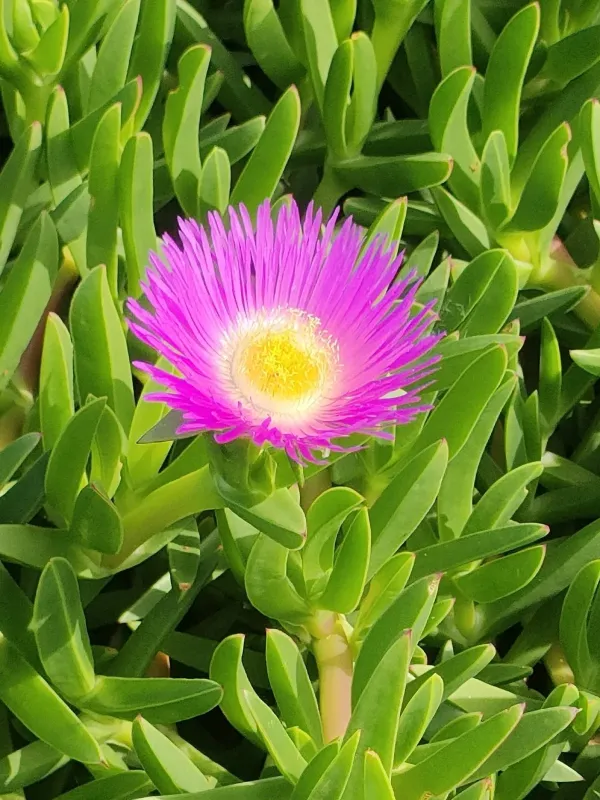
Description
Growing requirements
Eland's sour fig (Carpobrotus acinaciformis) is a robust perennial succulent belonging to the Aizoaceae family. Originating from South Africa, it is widely utilized for its hardiness and ability to thrive in harsh coastal environments.
The plant grows best in sandy, well-drained soils and requires full sun exposure to produce its characteristic vibrant flowers and dense, fleshy foliage. It is highly drought-tolerant and adapted to survive in saline conditions.
Agronomic requirements emphasize the need for excellent drainage. Planting should be avoided in waterlogged clay soils, as the species is highly susceptible to root rot when moisture levels remain persistently high.
Climate tolerance is restricted to regions without extreme frost. While it can handle light, brief cold snaps, prolonged freezing temperatures will damage the succulent tissues of the plant.
Economically, this species is valuable for soil stabilization and dune reclamation. Its fast-spreading growth habit effectively secures sandy terrains, preventing wind erosion and supporting local biodiversity in restoration projects.
Main diseases and pests
The primary threats to Carpobrotus acinaciformis are fungal infections triggered by excessive moisture and poor air circulation within the dense mats of foliage.
Common pests include mealybugs and scale insects. These pests often cluster in the leaf axils, extracting plant sap and leading to reduced vigor and stunted growth.
Treatment of pest infestations requires the application of targeted insecticides. In organic management systems, manual removal or neem oil applications can be effective.
Root rot, the most significant disease, is primarily a cultural issue. If identified early, affected sections should be pruned, and the watering frequency significantly reduced.
Maintaining a clean growing area and preventing overcrowding helps minimize the risk of pathogen outbreaks, ensuring the longevity and health of the ground cover.