
Carpobrotus aequilaterus
Carpobrotus aequilaterus
Description
Growing requirements
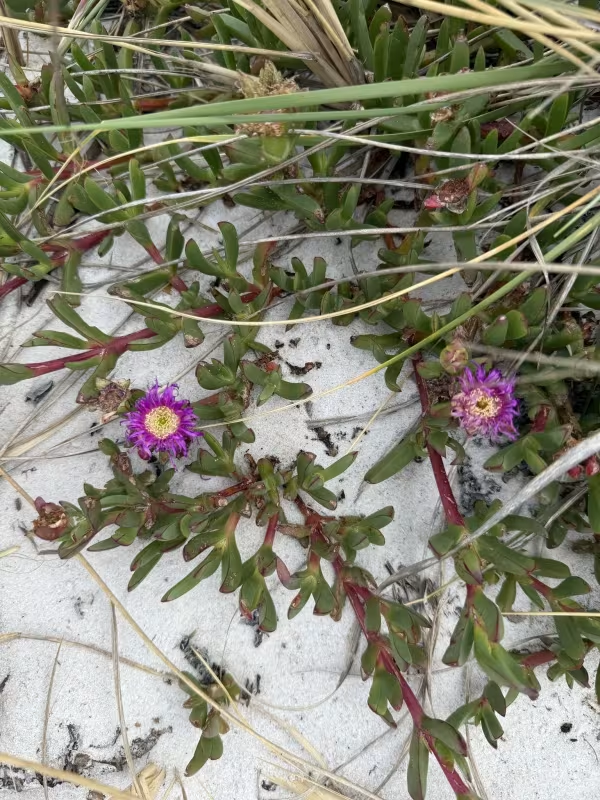
Carpobrotus aequilaterus is a perennial succulent plant belonging to the Aizoaceae family. Originating from the coastal regions of South Africa, it is widely recognized for its ability to thrive in harsh environments and poor soil conditions.
The plant is characterized by its succulent, triangular-shaped leaves which are highly effective at storing water. Its prostrate growth habit allows it to spread rapidly, creating thick carpets that help stabilize sand dunes and coastal slopes.
Cultivation requires full sun exposure to ensure healthy growth and flowering. It is essential to plant this species in well-draining, sandy soil, as it is highly susceptible to root rot if the moisture content becomes excessive.
It is remarkably salt-tolerant, which makes it an ideal candidate for erosion control in seaside agricultural or garden projects. The plant prefers arid or Mediterranean climates and does not tolerate freezing temperatures.
Agricultural management is minimal, focusing mainly on the restriction of supplemental irrigation. Over-fertilization should be avoided, as it encourages excessive foliage growth at the expense of root resilience and drought resistance.
Main diseases and pests
The primary threats to Carpobrotus aequilaterus are fungal pathogens, specifically those causing root and crown rot, which are often encouraged by poor soil aeration.
Mealybugs and spider mites are the most common pests that infest the dense foliage, especially in greenhouse or sheltered conditions.
To maintain plant health, it is vital to ensure adequate air circulation and to avoid overhead irrigation, which increases humidity levels around the foliage.
Application of horticultural oils or systemic insecticides may be necessary if infestation symptoms appear on the succulent leaves.
Regular sanitation of the area, including the removal of dead or rotting plant tissue, significantly reduces the risk of future disease outbreaks.