
Carpobrotus chilensis
Carpobrotus chilensis
Description
Sowing dates
Propagation of Carpobrotus chilensis is primarily achieved through stem cuttings, which ensures genetic consistency and faster establishment compared to seeds.
The optimal time for taking cuttings is late spring or early summer, coinciding with the plant's active vegetative growth phase.
Cuttings should be approximately 10 to 15 centimeters long and allowed to callous in a shaded, dry area for 48 hours before being planted in the substrate.
A well-draining sandy or perlite-based potting mix is essential for the successful development of the root system without the risk of rotting.
Once rooted, the plants should be transplanted to their permanent site, ensuring sufficient spacing for lateral spread, typically 30 to 45 centimeters apart.
Growing requirements
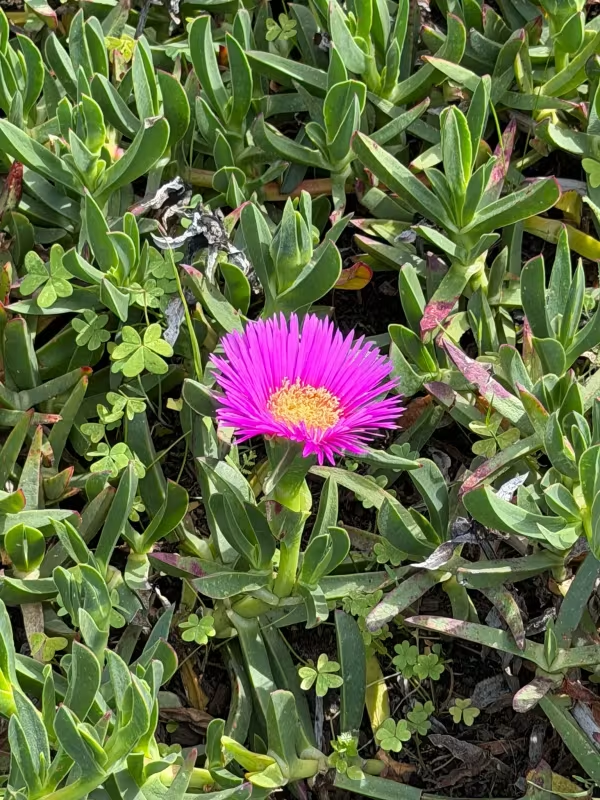
Carpobrotus chilensis, a member of the Aizoaceae family, is a creeping succulent characterized by its fleshy, triangular leaves and high drought tolerance.
The plant demands full sun exposure to maintain its compact growth habit and vibrant flowering cycles; shaded conditions inhibit photosynthesis and lead to etiolation.
Soil requirements are minimal regarding fertility, but excellent drainage is non-negotiable. The plant thrives in sandy, saline-rich, or rocky soils found in coastal environments.
It displays remarkable adaptation to low-moisture environments, utilizing its succulent leaves as water reservoirs during prolonged dry spells.
Temperature sensitivity is a limiting factor, as the species is not frost-hardy and requires protection or indoor storage when temperatures dip below freezing points.
Main diseases and pests
Overwatering is the primary cause of decline for this species, as stagnant moisture quickly leads to fatal crown and root rot pathogens.
Mealybugs are the most persistent pest, often colonizing the crevices of the succulent leaves and stems, resulting in stunted plant development.
Spider mites may become a localized issue if the plant is grown in low-humidity environments, necessitating regular inspection of the foliage.
Proper air circulation and maintaining a dry environment around the stems are the most effective cultural methods for preventing fungal infestations.
If chemical intervention is necessary, growers should utilize systemic insecticides or organic soaps specifically formulated for succulents to ensure plant safety.
Harvesting
While often used as an ornamental ground cover, the fruit of the plant is edible and can be harvested once it reaches maturity.
The harvest occurs when the fruit turns a reddish-purple or pinkish color and feels soft to the touch, indicating ripeness and sugar development.
Harvesting should be done using sharp shears to prevent damage to the trailing stems, which are sensitive to mechanical stress.
The fruits can be consumed fresh or processed into preserves, offering a salty-sweet flavor profile typical of this succulent species.
Periodic pruning is also considered a form of harvest to manage the plant's spread and promote new, healthier vegetative growth in the following season.