
Jordaaniella
Jordaaniella
Jordaaniella is a genus of succulent plants within the Aizoaceae family, commonly known as the ice plant family. These plants are well-known for their adaptation to arid environments and their visually striking succulent foliage.
What the section contains


Jordaaniella
Native to Southern Africa, these plants are typically found in sandy coastal or inland habitats. They have evolved to withstand intense solar radiation and minimal rainfall, making them an excellent choice for xeriscaping and sustainable gardening projects.
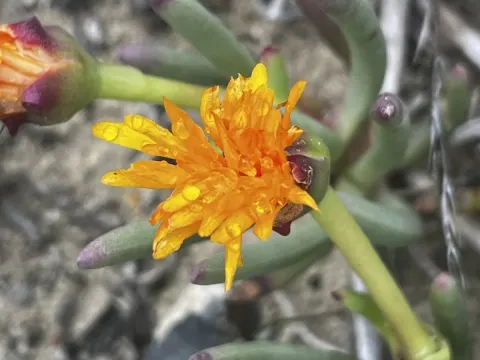
Botanically, Jordaaniella plants are characterized by their succulent, often triangular leaves and distinct, daisy-like flowers. They usually grow in a prostrate habit, forming dense mats that protect the soil surface from wind erosion and heat degradation.
The primary requirement for successful cultivation is a substrate with superior drainage. Whether grown in containers or in a rock garden, the soil must allow for rapid water runoff to prevent the accumulation of moisture around the root crown, which is vital for the plant's health.
Optimal environmental conditions involve full, direct sunlight throughout the day. Sufficient light exposure is essential for maintaining the plant's compact structure and ensuring healthy growth. In low-light conditions, the stems tend to etiolate and become fragile, losing their characteristic aesthetic appeal.
The most significant threats to Jordaaniella are related to cultural errors, specifically overwatering, which leads to root and stem rot. These diseases spread rapidly in stagnant, humid environments where soil drainage is insufficient.
Insect pests, such as mealybugs and spider mites, frequently target succulent tissues. These pests pierce the epidermis to consume the plant's sap, which can weaken the plant significantly and lead to secondary viral or fungal infections.
To manage these threats, it is critical to implement a strict irrigation schedule that allows the soil to dry out completely between waterings. This practice suppresses the development of moisture-loving pathogens and limits pest reproduction cycles.
If an infestation occurs, horticultural oils or specialized insecticides should be used carefully. Because succulents can be sensitive to certain chemical additives, a patch test is recommended before applying treatments to the entire collection.
General hygiene, such as removing debris from around the base of the plant and maintaining optimal spacing, helps prevent the onset of diseases. A healthy Jordaaniella, grown in appropriate conditions, is generally resilient and capable of thriving for many years.