
Jordaaniella uniflora
Jordaaniella uniflora
Description
Growing requirements
Jordaaniella uniflora is a succulent plant belonging to the Aizoaceae family. It is native to the coastal regions of South Africa, where it has evolved to thrive in sandy habitats and challenging coastal environments characterized by salt spray and intense sun.
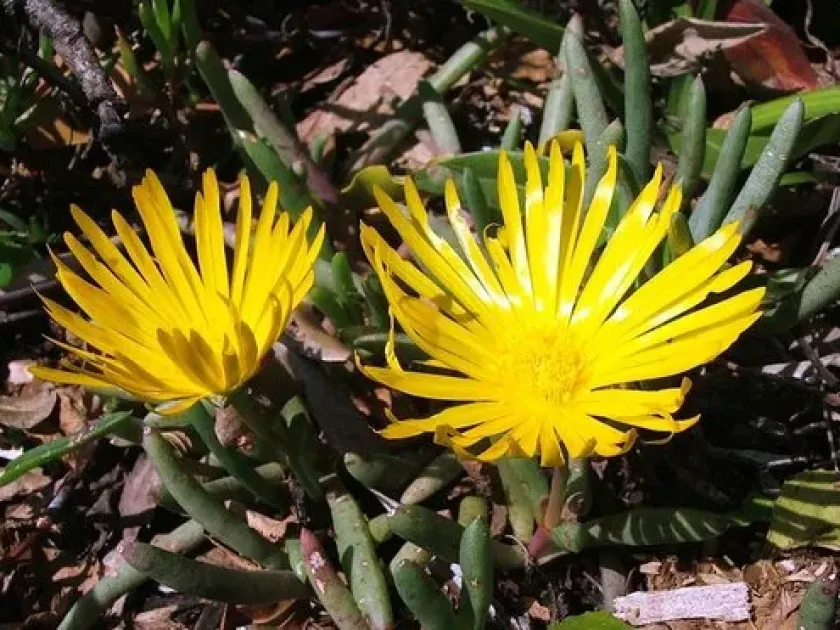
Botanically, the plant is recognized by its succulent, triquetrous leaves and prostrate growth habit, which allows it to form dense mats. The specific epithet 'uniflora' refers to its distinctive habit of producing single flowers, which open prominently under direct sunlight.
This species requires high light levels to maintain its physiological health. In an agricultural or horticultural setting, it must be planted in full sun exposure. Inadequate light results in etiolation, where the stems become weak, pale, and lose their dense mat-forming structure.
Soil requirements are strict regarding drainage. The plant necessitates a gritty, sandy substrate that prevents water from pooling around the roots. In clay-heavy soils, the plant is highly susceptible to root decay and physiological stress.
The primary use of Jordaaniella uniflora is in xeriscaping and sustainable landscaping. Due to its natural adaptation, it serves as an excellent ground cover for erosion control on sandy slopes and as a structural element in dry, Mediterranean-style rock gardens.
Main diseases and pests
The most significant threat to the plant's survival is overwatering. Excessive moisture, especially when coupled with cool temperatures or poor air circulation, inevitably triggers fungal infections that cause the stems to rot from the base upwards.
Mealybugs are the most common pests affecting this succulent. They tend to congregate in the axils of the leaves, where they are protected from environmental factors. Monitoring for white, cotton-like masses and timely treatment with systemic insecticides are essential for maintaining plant vigor.