
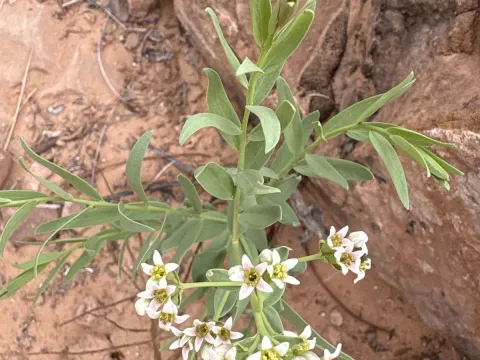
Comandra
Comandra
Comandra is a genus of perennial herbaceous plants belonging to the family Santalaceae. These plants are known for their hemiparasitic nature, meaning they draw water and minerals from the roots of various host plants through specialized structures called haustoria.
What the section contains


Comandra
The genus is native primarily to North America. It thrives in a wide range of habitats, from dry sandy dunes and rocky barrens to prairies and open woodlands. Its ability to tolerate low-nutrient soils makes it an ecologically interesting species in local plant communities.
Cultivation of Comandra in agricultural settings is rarely attempted due to its obligate requirement for host plants to complete its life cycle effectively. It does not behave like traditional crops and requires specific biotic interactions to persist in a given area.
Botanically, Comandra features simple, alternate, linear or lanceolate leaves and terminal clusters of small, white-greenish flowers. The root system is extensive and tough, designed for anchoring the plant and invading the host's root system for resource extraction.
Comandra does not have significant commercial value in modern agriculture. Its primary use remains in the field of conservation biology, specifically in projects focused on restoring native plant biodiversity in grassland ecosystems where the species is naturally adapted.