
Bastard toadflax
Comandra umbellata
Description
Growing requirements
Bastard toadflax (Comandra umbellata) is a herbaceous perennial plant belonging to the Santalaceae family. It is a known hemiparasite that relies on the roots of various woody and herbaceous host plants to supplement its nutritional requirements through specialized organs called haustoria.
This species is native to a broad range of habitats across North America, including open forests, dry prairies, and rocky barrens. It is highly adaptable to sandy or stony soils with excellent drainage, which is crucial for the health of its subterranean root system.
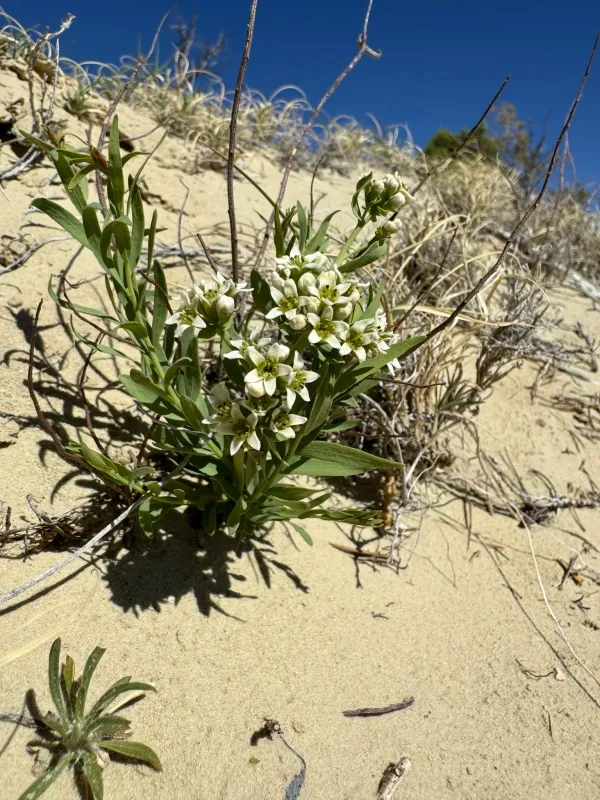
Botanically, Comandra umbellata is characterized by its smooth, upright, or spreading stems that usually reach heights of 10 to 40 centimeters. The foliage is glaucous and simple, while the flowers are small, greenish-white or creamy, and arranged in terminal umbel-like clusters.
In terms of climate, the species is remarkably hardy. It thrives in regions with cold winters and distinct growing seasons, showing a strong tolerance for drought conditions and fluctuating environmental factors common in grassland and open woodland environments.
While not a traditional cash crop, the species is occasionally valued in native plant restoration projects. Its ability to integrate into established plant communities makes it a candidate for restoring degraded ecosystems and enhancing biodiversity in dry, nutrient-poor landscapes.
Main diseases and pests
The primary threats to bastard toadflax include habitat fragmentation and the conversion of its native range into agricultural or residential land. The loss of suitable host plants is directly linked to the decline of the species in certain regions.
Pathogenic challenges include fungal infections such as root rot, especially when the plant is subjected to poor soil drainage or excessive stagnant moisture. These conditions can significantly impede the development of the haustorial connections.
Insect pests are typically not a major issue, but defoliating insects can occasionally affect the plant's photosynthetic capacity. Environmental stress often increases the plant's susceptibility to such opportunistic attacks by local fauna.
Chemical control measures in adjacent areas, specifically the broad use of herbicides, are highly detrimental to Comandra umbellata. Because it is a root parasite, it can potentially absorb chemicals transferred from the host plant's root system.
Maintaining long-term viability requires active management against invasive species that outcompete native perennials. Preserving a mosaic of host and parasite plants is essential for sustaining populations of this unique botanical species.