
Ethulia conyzoides
Ethulia conyzoides
Ethulia conyzoides is a member of the Asteraceae family. It is an annual herbaceous plant often found in agricultural settings where it acts as an invasive weed.
What the section contains
Ethulia conyzoides
The plant features an erect, branched stem that can grow significantly tall, allowing it to compete effectively for canopy space with various crops.
Its leaves are arranged alternately and typically exhibit a lanceolate shape with serrated edges, which serves as a key diagnostic feature during identification.
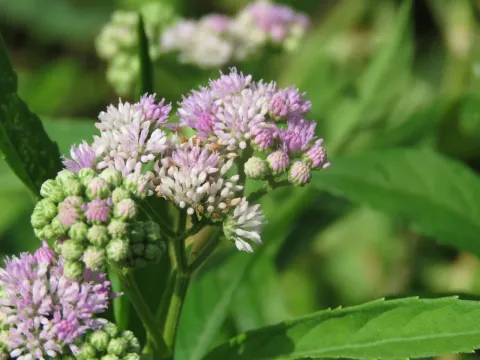
The inflorescences consist of small, clustered flower heads arranged in a corymb-like structure, often showing vibrant purple or pinkish coloration.
The root system is primarily taprooted, which enables the plant to extract moisture efficiently from deeper soil profiles during dry spells.
Ethulia conyzoides is widely distributed in tropical and subtropical regions, favoring damp environments and fertile soils that support vigorous vegetative growth.
It is particularly problematic in rice paddies and wetlands, where high moisture levels and consistent irrigation provide ideal conditions for its proliferation.
Beyond fields, it colonizes disturbed areas, irrigation canals, and roadsides, creating persistent seed banks that threaten neighboring agricultural lands.
The seeds are easily dispersed by wind and water, allowing the plant to rapidly invade new areas once the primary site is compromised.
It thrives under conditions of high humidity and heat, which are characteristic of the agro-ecosystems where it poses the greatest threat to food security.
The primary damage caused by Ethulia conyzoides is its aggressive competition with crops for limited resources such as sunlight, nitrogen, and soil water.
Its ability to form dense patches can effectively smother young crop seedlings, significantly reducing plant stand and uniformity in the early growth stages.
By consuming nutrients meant for the crop, the weed restricts the growth of primary plants, leading to smaller yields and poorer crop development.
Seed contamination is another major issue, as the abundance of seeds produced by the plant makes harvesting clean grain much more difficult and costly.
In high-density infestations, yield losses can be severe, requiring intensive management practices to mitigate the negative impact on overall farm productivity.
Mechanical control through deep tillage is recommended to bury seeds and prevent the emergence of new seedlings before the crop is established.
Crop rotation with competitive, fast-growing varieties is a viable biological strategy to suppress the development of Ethulia conyzoides in the field.
Chemical control involving selective herbicides is the most common approach to managing populations during the active vegetative growth phase of the crop.
Integrated management should also include the cleaning of irrigation channels and field edges to stop the introduction of seeds into the cultivated area.
- Early detection and spot treatment to stop seed formation.
- Maintaining field hygiene to prevent secondary infestations.
- Application of post-emergence herbicides according to labels.