
Eupatorium macrocephalum
Eupatorium macrocephalum
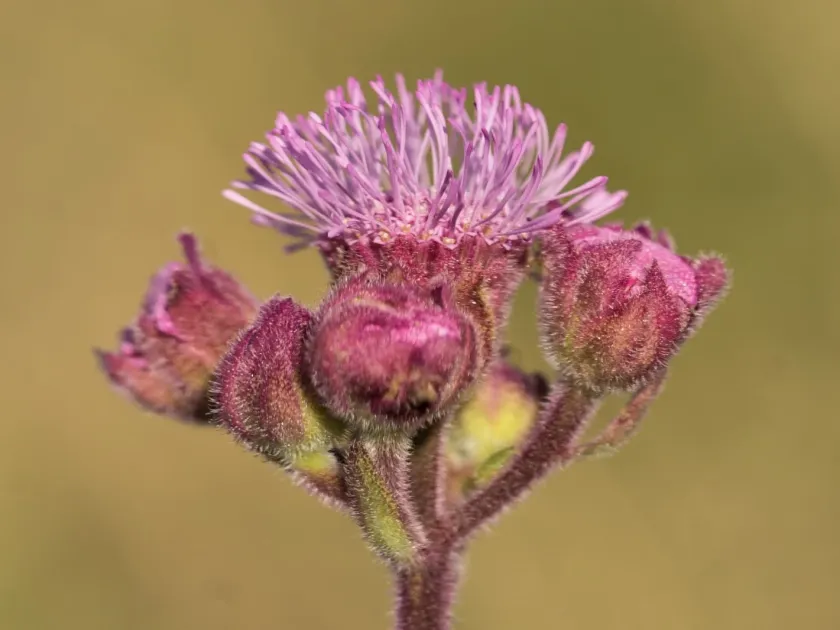
Description
How to tell it apart
Eupatorium macrocephalum is a perennial herbaceous plant belonging to the Asteraceae family, recognized by its robust growth and hardy nature.
The plant features upright stems covered with pubescence and leaves arranged in an opposite pattern with distinctively serrated margins, serving as a key identification mark.
During the flowering season, it produces large, dense purple or pink flower heads arranged in corymbose clusters, making the plants highly visible in the field.
A critical biological trait is its extensive rhizomatous root system, which allows the plant to persist in the soil for years and regenerate rapidly after disturbances.
The seeds are equipped with pappus, enabling efficient wind dispersal over large distances, which facilitates the rapid expansion of weed populations.
Where it grows
Native to South America, this plant acts as an invasive species in various agricultural landscapes, thriving in pastures, fallow lands, and roadside verges.
It readily invades cropland, particularly in fields with reduced tillage, where it competes effectively with perennial forage crops and various row crops.
The species prefers moist and fertile environments, often colonizing edges of irrigation ditches, wetlands, and low-lying parts of agricultural fields.
Due to its high adaptability, it can establish itself in diverse soil types, posing a continuous threat to the stability of local crop production.
The weed frequently infiltrates areas disturbed by human activity, taking advantage of open niches to establish dense and persistent colonies.
Harm it causes
The primary damage caused by Eupatorium macrocephalum involves intense competition with crops for essential resources such as water, nutrients, and sunlight.
Its vigorous growth and dense canopy shade out smaller crop plants, hindering their development and reducing the overall photosynthetic capacity of the field.
By exhausting soil nutrients, the weed significantly lowers yield potential, often leading to reduced economic returns for farmers in infested areas.
The plant can act as an alternative host for various pests and fungal pathogens, facilitating the spread of diseases to valuable agricultural commodities.
Infestation of pastures is particularly problematic, as some species in this genus may be toxic or unpalatable to livestock, degrading the quality of fodder.
How to control
Effective management begins with mechanical control methods such as deep plowing, which helps sever and exhaust the rhizome systems of the weed.
Frequent mowing is essential to prevent flowering and seed dispersal, gradually weakening the population over multiple growing seasons.
Chemical control using systemic herbicides is highly effective, as these compounds translocate through the plant tissues to reach and destroy the root system.
Integrating cultural practices like crop rotation and maintaining a dense crop canopy can naturally suppress the weed by limiting its access to light and space.
- Monitor field margins to stop initial colonization.
- Clean machinery thoroughly to avoid seed transportation.
- Use selective and non-selective herbicides based on the growth stage.
Taxonomy
- Latin name
- Eupatorium macrocephalum
- Family
- Сложноцветные (астровые)
- EPPO code
- EUPMC