
Ericameria arborescens
Ericameria arborescens
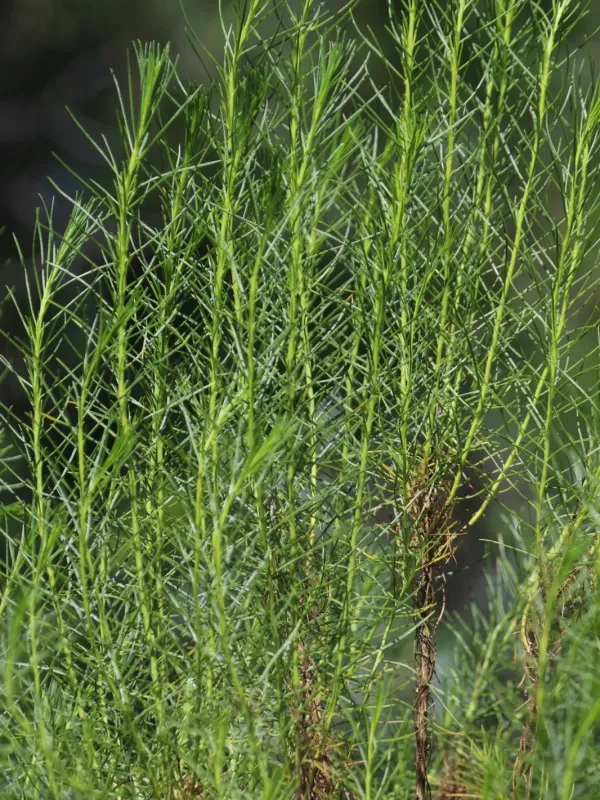
Description
How to tell it apart
Ericameria arborescens, commonly known as goldenbush, is a member of the Asteraceae family and grows as an evergreen shrub.
The plant is distinguished by its thin, resinous leaves and stiff, woody branches that can reach several feet in height.
It produces bright yellow flower heads clustered at the ends of branches, which bloom late in the summer and autumn seasons.
The root system is remarkably deep and robust, enabling the plant to thrive in dry and rocky environments where others struggle.
Its seeds are equipped with pappus, allowing for wide dispersal via wind currents across open fields and agricultural landscapes.
Where it grows
This species is native to California and is commonly found in chaparral ecosystems and disturbed land areas.
As a weed, it frequently colonizes neglected agricultural plots, overgrazed pastures, and edges of cultivated fields.
It acts as a pioneer species on lands recovering from wildfires, often forming dense thickets that prevent natural succession.
It shows a high tolerance for poor, well-drained soils, which allows it to dominate margins of farmland.
The plant prefers sunny locations and is often encountered in transition zones between wildlands and managed crops.
Harm it causes
Ericameria arborescens is a significant competitor for water resources, often depriving neighboring crops of vital moisture.
Its dense growth habit blocks sunlight and occupies space, effectively shading out smaller, desirable forage species.
Due to its high resin content, it constitutes a major fire hazard during dry spells, threatening surrounding infrastructure.
The woody nature of the stems poses physical threats to farm machinery, leading to increased maintenance or damage costs.
Invasion of this species results in reduced land value, as it makes soil cultivation significantly more difficult and time-consuming.
How to control
Mechanical removal through grubbing or deep uprooting is highly recommended for small infestations to ensure full elimination.
Cultural practices include consistent mowing before seed set, which helps in depleting the plant's energy reserves over time.
Chemical control using systemic herbicides applied to cut stumps is effective for mature individuals in agricultural borders.
Integrated weed management should involve long-term monitoring and re-seeding of treated areas with desirable cover crops.
- Manual uprooting of young saplings.
- Application of brush-specific herbicides.
- Deep plowing to disrupt root establishment.
- Maintaining field boundaries to prevent encroachment.
Taxonomy
- Latin name
- Ericameria arborescens
- Family
- Сложноцветные (астровые)
- EPPO code
- HAPAR