
Centipeda cunninghamii
Centipeda cunninghamii
Centipeda cunninghamii, commonly known as common sneezeweed, is a member of the Asteraceae family. It is a prostrate or creeping herb characterized by stems that frequently root at the nodes.
What the section contains
Centipeda cunninghamii
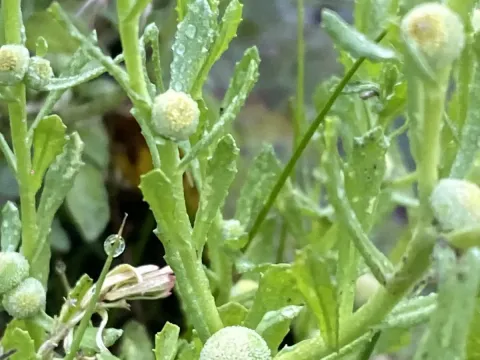
The leaves are alternate, oblong to spatulate, and often possess serrated margins. A distinguishing feature is the strong, aromatic scent released when the plant tissue is crushed.
Flower heads are small, globular, and greenish-yellow to brownish in color. They are sessile or nearly sessile, located in the leaf axils, lacking prominent ray florets.
The plant demonstrates a high capacity for vegetative propagation. Its ability to spread horizontally and take root quickly allows it to colonize bare ground effectively.
The root system is generally fibrous and shallow, adapted to moist soil conditions where the plant can thrive throughout the growing season.
Native to Australia and New Zealand, this plant has spread to various temperate regions globally. It typically favors damp environments, such as wetlands, riverbanks, and areas with poor drainage.
In agricultural settings, it is commonly found in irrigated paddocks, rice fields, and low-lying areas where water tends to pool after heavy rainfall or flooding.
The plant frequently colonizes disturbed soil, such as farm tracks, irrigation channels, and field edges where competition from established perennial vegetation is low.
It thrives in heavy, moisture-retentive soils. Increased irrigation practices often exacerbate the spread of this species in commercial farming operations.
Centipeda cunninghamii is also observed in pastures where it occupies gaps in the canopy, often appearing after livestock grazing has thinned out the primary forage cover.
The primary damage caused by this weed is the intense competition for resources, specifically water and soil nutrients, which negatively impacts the growth of adjacent crops.
Its prostrate growth habit allows it to create a dense mat on the soil surface, effectively smothering young seedlings and preventing their successful establishment.
The weed acts as a host for various pathogens and pests, potentially serving as a reservoir for diseases that may later spread to valuable commercial crops.
Infestations can disrupt mechanical field operations, as the thick, creeping biomass interferes with seeding equipment and soil cultivation tools.
In pastures, high densities of Centipeda cunninghamii reduce overall biomass production and can displace more palatable and nutritious forage species, impacting livestock performance.
Improving soil drainage is a fundamental cultural control measure. By eliminating low-lying, damp spots, farmers can significantly reduce the weed's ability to survive and propagate.
Mechanical control, such as tillage and row cultivation, is effective if performed early in the plant's life cycle. Cultivation should be timed during dry weather to prevent root regrowth.
Chemical control involving the application of registered selective herbicides can be effective. It is critical to apply these agents before the weed reaches the flowering stage.
Crop rotation and competitive planting are essential management strategies. High-density planting that promotes rapid canopy closure helps to shade out the weed and limit its spread.
Regular field scouting is recommended to identify emerging populations. Spot spraying or targeted mechanical removal in the early stages can help prevent widespread infestation and seed bank accumulation.