
Centaurea leucophaea
Centaurea leucophaea
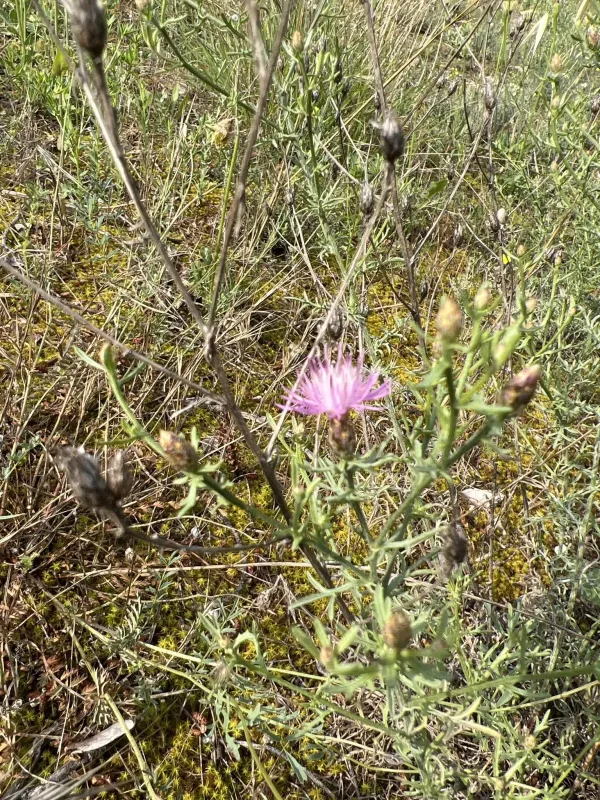
Description
How to tell it apart
Centaurea leucophaea, belonging to the Asteraceae family, is a perennial herbaceous plant known for its high resilience and adaptability in various field conditions.
The plant is characterized by its grayish, pubescent leaves, which help it minimize water loss in arid or dry environments. The stems are typically erect and branched, reaching heights of 60 to 80 centimeters.
Its inflorescences are distinct purple or pinkish flower heads. The bracts surrounding the flower heads have thin, papery margins, serving as a key diagnostic feature for identification.
It propagates both via seeds, which are easily carried by the wind, and through a deep, extensive root system that allows it to survive in depleted soils.
In early growth stages, the plant forms a ground-hugging rosette that captures sunlight effectively, blocking the emergence and development of neighboring crop seedlings.
Where it grows
Centaurea leucophaea prefers open, dry habitats such as sandy soils, stony slopes, roadsides, and abandoned lands that have been left uncultivated for extended periods.
In an agricultural context, it primarily poses a threat to cereal crops and pastures, where it establishes deep roots that compete directly with cultivated species.
The weed often invades fields from margins or buffer zones, highlighting the importance of managing non-cropped areas to prevent the spread of seeds into production plots.
It thrives in soils with low fertility, making it a pioneer species that takes advantage of degraded agricultural land where crops are already struggling to establish a canopy.
Its ability to adapt to varying moisture levels means that even in years with fluctuating rainfall, this weed remains a constant challenge for farmers.
Harm it causes
The primary damage caused by Centaurea leucophaea is through aggressive resource competition, specifically for water and nutrients, which are diverted from the main crop to the weed.
As the plant matures, its dense foliage shades out cereal crops, reducing the efficiency of photosynthesis in crop plants and ultimately leading to a decrease in final yields.
In pastures, the presence of this weed is detrimental because its bitter taste and tough texture make it unpalatable for livestock, thereby reducing the nutritional value of grazing land.
Harvesting operations are significantly impacted by the presence of this weed, as the tough, woody stems can cause mechanical strain on machinery and increase the moisture content of harvested grain.
The weed also serves as a host for various agricultural pests, creating a reservoir that can lead to infestations in primary crop cycles if not managed correctly.
How to control
Effective agrotechnical control starts with deep moldboard plowing, which is essential to sever the root system and inhibit the regrowth of perennial weeds.
Regular cultivation and harrowing in the rosette stage are highly effective in starving the root system of its energy reserves, gradually killing the plant over time.
Chemical control usually involves the application of selective herbicides, specifically those targeting perennial broadleaf weeds within cereal crop systems.
- Rotating crops with row crops to allow for mechanical inter-row cultivation.
- Ensuring seed purity to avoid introducing the weed into clean fields.
- Mowing field perimeters regularly to prevent the seed bank from replenishing.
For non-crop areas or fallow lands, application of glyphosate-based systemic herbicides during the peak growth phase is an effective measure for long-term eradication.
Taxonomy
- Latin name
- Centaurea leucophaea
- Family
- Сложноцветные (астровые)
- EPPO code
- CENLE