
Centromadia parryi
Centromadia parryi
Description
How to tell it apart
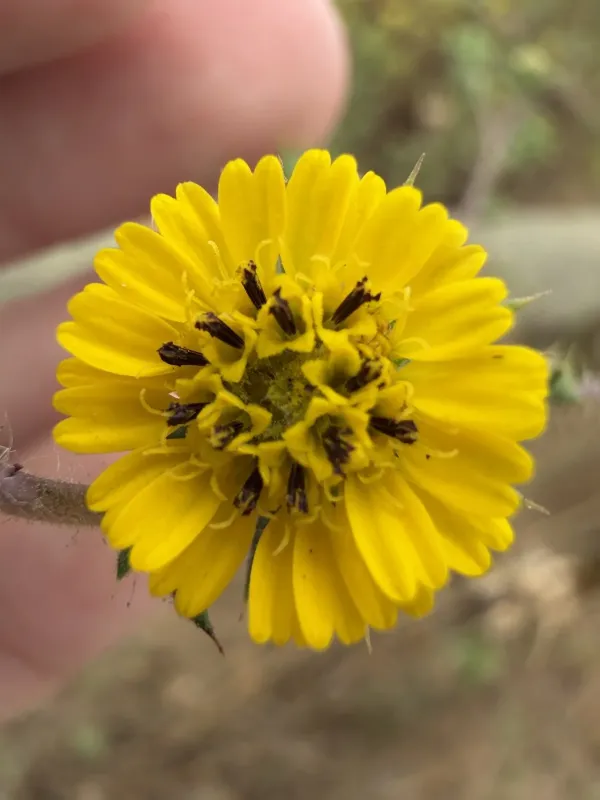
Centromadia parryi, commonly known as Parry's spikeweed, is an annual herbaceous plant belonging to the Asteraceae family. It is easily identified by its rigid, branched stem and characteristic sharp, spiny bracts surrounding the flower heads.
The leaves are linear and often covered in glandular hairs, creating a sticky texture. The plant produces yellow flower heads that bloom late in the season, distinguishing it from many other common agricultural weeds.
A notable feature of this species is its aggressive branching habit. As the plant matures, it develops a bushy structure that can significantly interfere with field operations and crop harvesting.
Reproduction occurs through seeds, which are equipped with structures that facilitate wind dispersal. This mechanism allows the weed to colonize vast areas rapidly if left unmanaged during the ripening phase.
The plant exhibits high ecological tolerance, capable of thriving in various soil conditions, including saline and disturbed environments, which often makes it a persistent issue for farmers.
Where it grows
Centromadia parryi is native to western North America, particularly California. It typically inhabits open spaces, moist meadows, and areas where the soil surface has been recently disturbed or modified.
In agricultural settings, it frequently occupies field margins, irrigation ditches, and fallow lands. From these reservoirs, it easily spreads into active crop fields, particularly where crop competition is low.
The weed thrives in fields with inconsistent water management. It can outcompete crops for available moisture, especially during the peak of summer when water resources are most critical for crop yield.
It prefers areas with high light exposure and well-drained soils, but it is versatile enough to grow in compacted or nutrient-poor soils where crops might struggle to establish a healthy canopy.
Human activity is a primary factor in its habitat expansion. The movement of machinery between fields and the use of contaminated equipment are major contributors to the spread of seeds across different plots.
Harm it causes
The primary damage caused by Centromadia parryi is nutrient and water competition. Its robust root system allows it to effectively deplete soil resources, leading to significant yield losses in cereal and forage crops.
During harvest, the spiny nature of the plant causes significant mechanical issues. The spikes can damage combine harvesters and contaminate the harvested grain, resulting in higher processing costs and lower product quality.
Centromadia parryi also acts as a secondary host for various agricultural pests and pathogens. Its presence can lead to increased pest pressure on nearby crops, necessitating additional pesticide applications.
In livestock production, this weed is particularly dangerous. If it infiltrates hay or forage crops, the sharp spines can cause severe oral and digestive tract injuries to cattle and other grazing animals.
Furthermore, the plant's ability to form dense patches creates an unsightly and unproductive field environment, reducing the overall economic efficiency of the farming operation.
How to control
Integrated Weed Management (IWM) is essential for controlling Centromadia parryi. Crop rotation with competitive crops that shade the ground is one of the most effective long-term strategies to suppress its growth.
Mechanical control, such as deep fall tillage, helps bury seeds at depths that prevent successful germination. Mowing field edges before the weed sets seed is a critical practice to prevent further infestation.
Chemical control is most effective when applied at the rosette stage. Once the plant enters the flowering phase, its hardened structure makes it much more resistant to standard herbicides.
Maintaining the cleanliness of agricultural equipment is vital. Cleaning machinery after moving from infested areas to clean fields significantly slows the spread of this invasive weed.
- Use certified weed-free seed for planting.
- Apply systemic herbicides during the early vegetative growth phase.
- Monitor fields regularly to spot and eradicate isolated patches before they become dominant.
Taxonomy
- Latin name
- Centromadia parryi
- Family
- Сложноцветные (астровые)
- EPPO code
- HEZPA