
Chilean cudweed
Gnaphalium chilense
Description
How to tell it apart
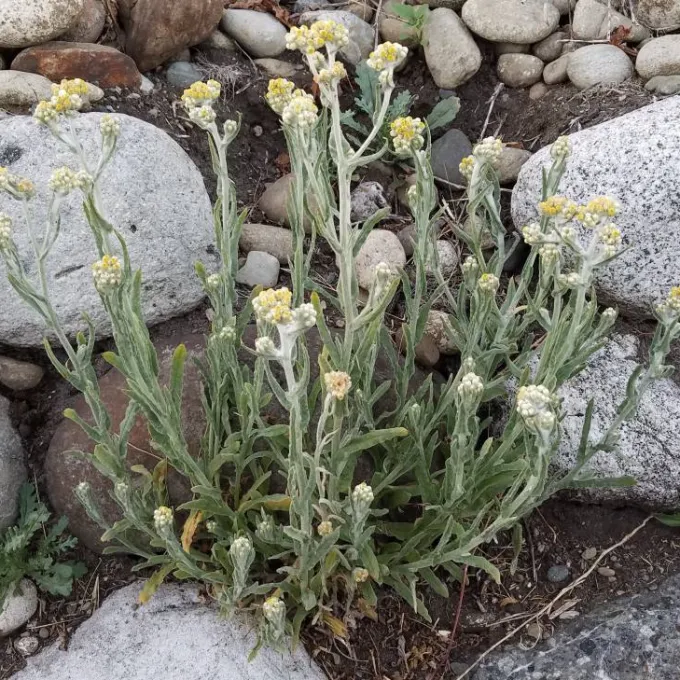
Chilean cudweed (Gnaphalium chilense) belongs to the Asteraceae family. It is an annual or biennial herbaceous plant with an upright stem that can reach heights from 10 to 60 centimeters.
The stems and leaves of the plant are covered in dense, woolly pubescence, giving it a characteristic grayish or silvery appearance. The leaves are alternate, linear-lanceolate, entire, and often narrowed at the base.
The inflorescences are dense heads gathered in tight clusters at the tops of the stems. The bracts of the heads consist of dry, papery scales that may have white, yellowish, or brown shades.
The plant has a taproot system that is relatively weak but allows it to anchor effectively in light or disturbed soils. The seeds are tiny and equipped with a pappus, facilitating active wind dispersal over significant distances.
Biologically, the plant is a typical ruderal species exhibiting high ecological plasticity under temperate climate conditions.
Where it grows
The species is primarily native to Western North America but acts as a weed capable of adapting to various conditions worldwide.
It prefers open, well-lit areas with sandy, gravelly, or sandy-loam soils and frequently colonizes abandoned lands and field edges.
In agricultural practice, Chilean cudweed is most often recorded in row crops and in fields with low levels of agrotechnical management.
The plant successfully colonizes roadsides, fences, and drainage ditches, from which seeds are easily carried into cultivated fields during field operations.
Within agroecosystems, it typically occupies the ecological niche of a secondary weed, showing peak activity during the spring and summer periods.
Harm it causes
The damage caused by Chilean cudweed primarily stems from its competition for space, sunlight, and nutrients during the initial growth stages of cultivated crops.
As a ruderal plant, it can rapidly develop biomass in bare patches, suppressing the growth of weaker crops and contributing to their delayed development.
Dense thickets of this weed can impede mechanized operations, clogging harvesting machinery and increasing crop yield losses during grain or vegetable harvests.
The presence of the weed in a field also creates an unfavorable microclimate, promoting the development of fungal diseases due to increased humidity in dense stands.
Furthermore, the seeds of the cudweed, possessing high buoyancy, contaminate the soil seed bank, ensuring new outbreaks in subsequent seasons.
How to control
Agrotechnical control begins with proper crop rotation, which prevents the accumulation of weed seeds in the soil over time.
An effective method is regular deep plowing or discing, which cuts the root system and buries seeds at depths that inhibit germination.
Mechanical destruction of seedlings at the cotyledon stage using inter-row cultivation significantly reduces the weed population before flowering.
Chemical control involves the use of systemic post-emergence herbicides to which members of the Asteraceae family are sensitive, in accordance with crop-specific regulations.
- Prevention of weed spread from field edges and borders.
- Timely cleaning of planting material.
- Application of broad-spectrum herbicides during early weed development stages.
Taxonomy
- Latin name
- Gnaphalium chilense
- Family
- Сложноцветные (астровые)
- EPPO code
- GNACH