
Centaurea virgata
Centaurea virgata
Description
How to tell it apart
Centaurea virgata, commonly known as a type of knapweed, is a perennial herbaceous plant belonging to the Asteraceae family. It is recognized by its deep taproot, which allows it to thrive in harsh environments.
The plant features erect, highly branched stems, often creating a bushy appearance. A mature specimen typically reaches a height of 30 to 80 centimeters, with multiple branches extending from the main stem.
Its leaves are pinnately lobed; the basal leaves form a rosette, while the cauline leaves are arranged alternately. The plant is often covered in a fine, grayish tomentum, giving it a characteristic muted color.
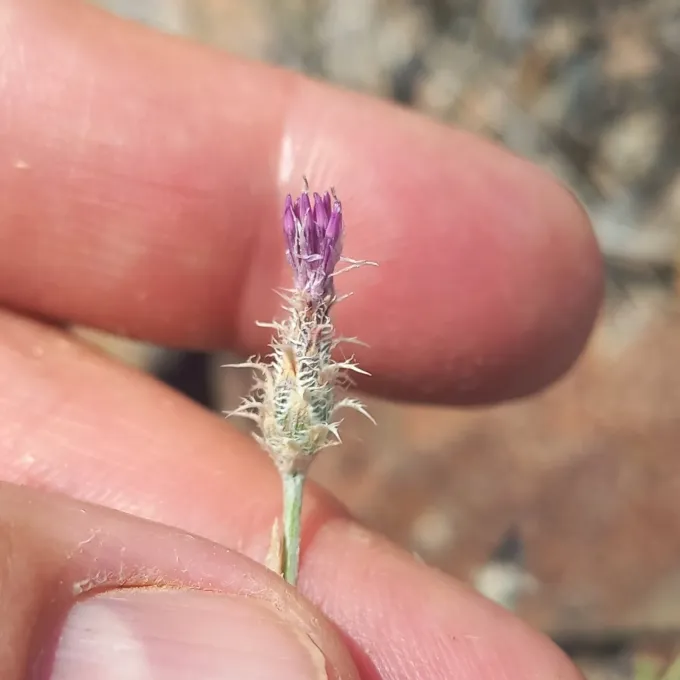
The flowers are arranged in small, solitary heads at the ends of the branches. The color of the florets ranges from pale pink to white or light purple, depending on the specific subspecies and environmental conditions.
The seeds are equipped with a pappus, a tuft of hairs that facilitates wind dispersal. This mechanism ensures that the plant can effectively colonize new areas, often leading to rapid spread.
Where it grows
This weed prefers dry, disturbed soils and is frequently found in rocky or sandy terrain. It is particularly well-adapted to steppe ecosystems and arid climates where other vegetation may struggle.
In agricultural settings, it commonly infests grain fields, perennial grass pastures, and fallow lands. It is also frequently found along roadsides and in abandoned agricultural sites.
Its high drought tolerance makes it a significant competitor in regions with limited rainfall. It can easily establish itself in cultivated fields where the soil has been disturbed.
The species is highly resilient to grazing. Livestock often avoid consuming it due to its coarse, bitter-tasting stems, which allows the plant to become dominant in overgrazed pastures.
Once established, the plant is difficult to eradicate because its deep taproot can persist through seasonal changes, allowing it to regenerate year after year without difficulty.
Harm it causes
The primary agricultural impact of Centaurea virgata is its intense competition with crops for water and soil nutrients, which directly leads to reduced yields and lower crop quality.
The weed exhibits allelopathic properties, meaning it releases chemical substances into the soil that inhibit the germination and growth of neighboring crop plants.
During harvest, the stiff, branched stems can interfere with agricultural machinery, leading to operational delays, increased mechanical wear, and potential damage to harvesting equipment.
The seeds often act as a contaminant in harvested grain. Removing these seeds requires specialized cleaning equipment, increasing the post-harvest costs for farmers.
In pasture systems, this species displaces desirable forage grasses. This reduces the overall carrying capacity of the land and negatively impacts the nutrition of livestock grazing on the infested fields.
How to control
Successful management of this weed requires an integrated approach that combines mechanical cultivation with targeted chemical control strategies to prevent further spread.
Mechanical methods include deep plowing and regular tillage of fallow fields. These practices aim to sever the taproot and deplete the plant's stored energy, eventually weakening the population.
Cultural control involves planting competitive cover crops or high-density cash crops that shade the ground, effectively outcompeting the weed for sunlight and soil resources.
Chemical control is effective when using systemic herbicides during the rosette stage, which is the period when the plant is most susceptible to translocated active ingredients.
Integrated weed management programs emphasize early detection and eradication of small infestations before the plant reaches the flowering and seed-dispersal stages.
Taxonomy
- Latin name
- Centaurea virgata
- Family
- Сложноцветные (астровые)
- EPPO code
- CENSQ