
Centaurea hanryi
Centaurea hanryi
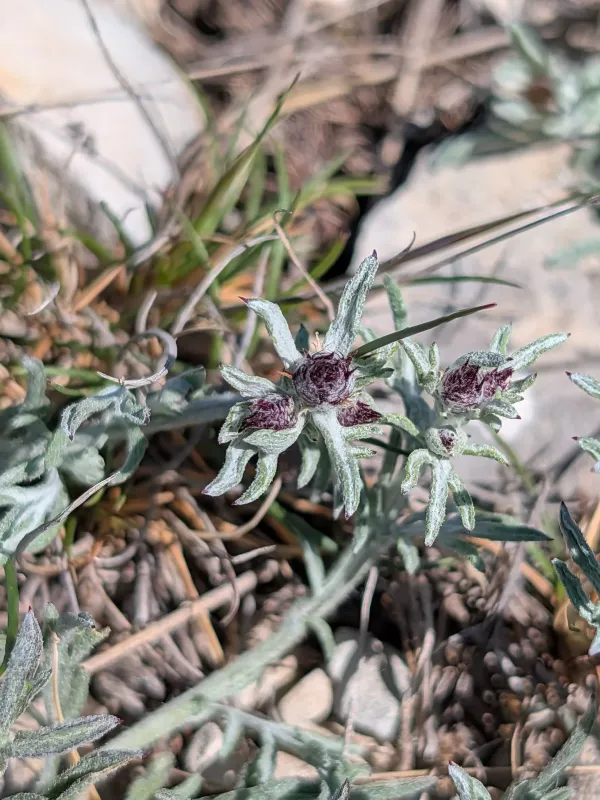
Description
How to tell it apart
Centaurea hanryi belongs to the Asteraceae family. It is a perennial herbaceous plant characterized by a well-developed taproot system, which allows it to survive in conditions of limited soil moisture.
The plant features upright, branched stems covered with alternate leaves, which can vary in shape from lanceolate to pinnately lobed. The leaf surface is often slightly pubescent, a trait that helps the plant minimize transpiration in dry habitats.
The inflorescence is a typical thistle-like head. The florets are surrounded by an involucre of scarious bracts, the shape and structure of which serve as primary diagnostic features for identifying this specific species.
Biologically, the plant is distinguished by high seed production, ensuring its rapid expansion across agricultural lands. Flowering typically occurs during the summer months, followed by the development of achenes equipped with pappus for wind dispersal.
Propagation occurs primarily through seeds, though the presence of an established root system allows the plant to remain viable even after mechanical disturbance during soil cultivation.
Where it grows
Centaurea hanryi is mainly found in regions with temperate climates, preferring open, well-lit sites. It frequently infests dry meadows, roadsides, and wasteland bordering agricultural fields.
In farming, this species is most problematic in cereal crops and perennial grass fields. It successfully adapts to agricultural conditions where minimal soil tillage is practiced.
The plant demonstrates high resistance to drought, allowing it to compete with crops for moisture during critical growth stages. It is often observed in fallow lands and abandoned fields that have not been managed for a long period.
The spread of the weed is often associated with contaminated seed lots or the long-distance transport of achenes by wind from primary infestation hotspots.
Typical habitats include calcareous soils and slopes, where other competing species develop less aggressively, granting Centaurea hanryi a competitive advantage in colonizing the area.
Harm it causes
The primary damage caused by Centaurea hanryi is intense competition with crops for living space, essential nutrients, and available soil moisture.
Infestation leads to significant yield losses in cereals, as the weed's robust root system absorbs nitrogen and other minerals more rapidly than the root systems of cereal crops.
Beyond direct competition, the presence of this weed complicates the harvesting process, increasing moisture levels in the grain mass and contaminating the final commodity with foreign matter.
The plant can act as a reservoir for various pests and fungal pathogens, which can subsequently migrate to healthy agricultural crops, leading to further secondary damage.
Economic losses are compounded by the additional costs required for cleaning seed material and the application of expensive herbicides needed to localize the weed outbreaks.
How to control
Agronomic control measures include high-quality primary soil tillage, specifically deep plowing, which hinders seed germination and depletes the energy reserves of the perennial root system.
Adherence to crop rotation, including the use of row crops, allows for effective destruction of weed rosettes in the early stages of vegetation through inter-row cultivation.
Chemical control is based on the use of systemic selective herbicides, particularly during the phase of active weed growth before the development of reproductive organs.
- Application of hormone-mimicking herbicides (2,4-D, MCPA groups).
- Use of sulfonylureas to suppress weed growth in cereal crops.
- Timely mowing on non-crop areas to prevent seed production.
The effectiveness of chemical protection depends heavily on the plant's growth stage: Centaurea hanryi is most vulnerable during the rosette stage, when herbicides are most efficiently translocated into the root system.
Taxonomy
- Latin name
- Centaurea hanryi
- Family
- Сложноцветные (астровые)
- EPPO code
- CENHS