
Acidovorax citrulli
Acidovorax citrulli
Description
How to identify
Acidovorax citrulli is a gram-negative, motile rod-shaped bacterium belonging to the Comamonadaceae family, known as the primary cause of Bacterial Fruit Blotch (BFB).
This phytopathogen is highly specialized, primarily affecting plants of the Cucurbitaceae family, including watermelon, melon, and pumpkin.
The bacterium is known for its persistence; it can survive on infected seeds, crop debris, and alternative weed hosts, making it difficult to eradicate once established.
Laboratory diagnosis typically involves polymerase chain reaction (PCR) tests, ELISA, or culture-based methods on selective media to differentiate it from other bacterial spots.
Due to its high economic impact, this pathogen is strictly regulated in many countries as a quarantine organism requiring mandatory phytosanitary certification.
What it damages
Watermelon is the most severely affected crop, often suffering complete yield loss if conditions are favorable for pathogen development during the growing season.
The infection manifests on seedlings, leaves, stems, and fruits, with fruit lesions being the most significant in terms of direct commercial losses.
Seed-borne transmission is a major issue, as it allows the pathogen to be introduced into new fields, potentially causing an epidemic from the very start of cultivation.
In greenhouses, high planting density and constant moisture facilitate rapid spread, leading to extensive tissue necrosis and eventual plant death.
Even non-symptomatic plants may harbor the bacteria, serving as silent sources of inoculum that can spread the disease under stress conditions.
When it appears
The disease development is highly dependent on environmental conditions, with the pathogen being most active at temperatures between +25°C and +30°C.
High humidity, combined with rainfall or overhead irrigation, plays a critical role in the dissemination of bacteria via water splashing from infected to healthy tissue.
The incubation period is relatively short, usually lasting only a few days, which allows the disease to propagate rapidly in dense commercial plantings.
During the off-season, the bacterium remains in a latent state, overwintering on plant debris in the soil or persisting inside stored seeds.
Effective spread often occurs during agricultural operations, such as pruning or mechanical cultivation, when moisture is present on the leaf surfaces.
Signs of infestation
Initial signs appear as small, water-soaked, angular lesions on leaves, which eventually turn necrotic and dark brown, often surrounded by a chlorotic halo.
On stems, cracking may occur, sometimes associated with the exudation of bacterial ooze that dries into a thin, white crust on the plant surface.
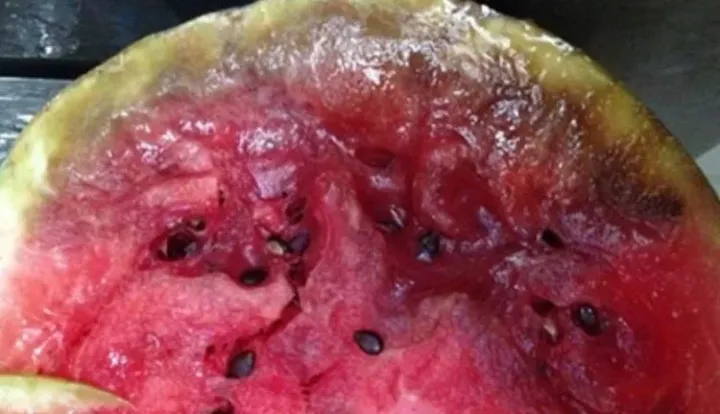
Fruit infection is characterized by dark, water-soaked, firm spots that rapidly expand, leading to internal decay and the collapse of the fruit structure.
In seedlings, the pathogen causes rot and collapse, often leading to damping-off symptoms that can be mistaken for other soil-borne diseases.
- Water-soaked lesions on cotyledons.
- Wilting of leaves and vines.
- Bacterial oozing on fruit skins.
- Dark, irregular blotches on ripening fruit.
Control measures
The most important control measure is the use of high-quality, certified, pathogen-free seeds that have undergone rigorous laboratory testing.
Crop rotation is essential to reduce the inoculum pressure in the soil, with a minimum break of 3 to 4 years between cucurbit crops.
Sanitation practices, including the removal and deep burying of infected crop debris, are vital to minimize the survival of the pathogen in the environment.
Managing the greenhouse environment by improving air circulation and preventing leaf wetness can significantly reduce the incidence of the disease.
Chemical control, including the application of copper-based bactericides, is mostly preventative and provides limited effectiveness once the infection is established.
Causes diseases · 1
Discussion
No discussions yet — be the first.