
Agrobacterium rhizogenes
Agrobacterium rhizogenes
Description
How to identify
Agrobacterium rhizogenes (reclassified as Rhizobium rhizogenes) is a soil-borne, Gram-negative bacterium belonging to the Rhizobiaceae family, known for its ability to transform plant cells.
The bacterium carries an Ri (root-inducing) plasmid, which it transfers into the plant genome upon infection, forcing the host to produce abnormal tissues.
Unlike Agrobacterium tumefaciens, which causes crown gall, A. rhizogenes specifically triggers the rapid development of adventitious roots.
It occupies the rhizosphere, interacting with plant roots and exploiting nutrient exudates while simultaneously altering the plant’s hormonal balance for its own survival.
This pathogen is widely used in genetic research and plant biotechnology, but in industrial agriculture, it is viewed primarily as a damaging agent.
What it damages
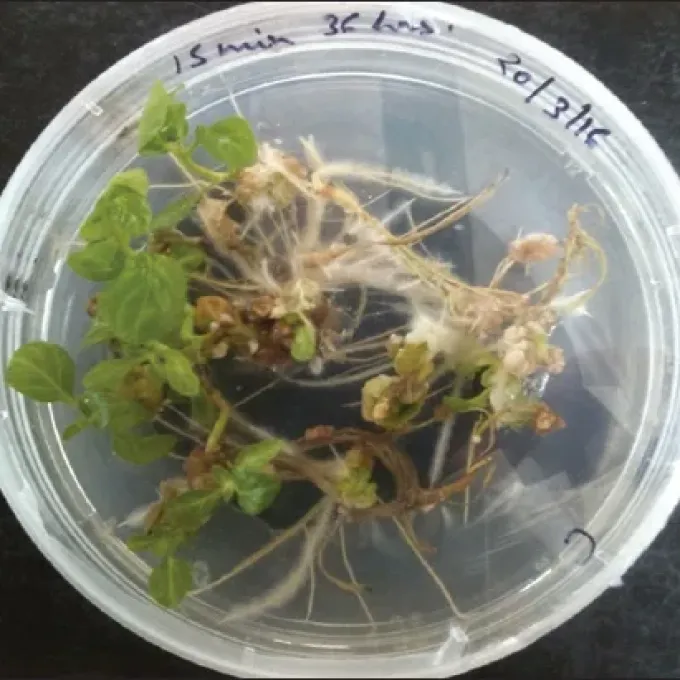
The signature symptom of this infection is known as "hairy root disease," characterized by an excessive, uncontrolled growth of thin, highly branched lateral roots.
The disease significantly impacts greenhouse crops, particularly cucumbers, tomatoes, and roses, when grown in hydroponic systems or soil.
The abnormal root system is dysfunctional, leading to poor water and nutrient uptake, which results in stunted growth, chlorosis, and significantly reduced yield.
In greenhouse settings, the pathogen spreads rapidly through recycled nutrient solutions, potentially infecting an entire facility in a short period.
Severe infestation causes total plant decline, making the affected crop non-viable and requiring complete removal of the plant material and sanitation of the substrate.
When it appears
A. rhizogenes remains active year-round in greenhouses where optimal conditions of temperature and moisture are maintained for plant growth.
The pathogen thrives at soil or substrate temperatures ranging from 18°C to 25°C, which is common in commercial vegetable production.
The infection cycle is continuous; if not managed, the bacteria survive in water systems, irrigation equipment, and remnants of organic matter.
Outbreaks are most noticeable during periods of rapid plant growth, when high water consumption increases the likelihood of systemic transmission via irrigation.
Lack of rigorous disinfection practices allows the pathogen to persist in a facility for many cycles, leading to chronic management issues.
Signs of infestation
The visual hallmark is a dense, "hairy" mass of white, tangled roots that replaces the healthy root structure and creates a bushy appearance.
Above-ground signs include symptoms of nutrient deficiency such as yellowing leaves, marginal necrosis, and overall failure to thrive, even under optimal fertilization.
Plants may show reduced vigor, and in hydroponic setups, the root mass might physically obstruct drainage channels or filters.
Infected root zones may exhibit localized decay, and the substrate can develop a distinct unpleasant odor due to the buildup of metabolic byproducts.
Confirmation of the pathogen usually requires laboratory diagnostics, such as PCR detection of the specific Ri-plasmid sequences present in the infected plant tissue.
Control measures
Control is primarily preventive, as once the bacterium has integrated its DNA into the plant cells, there are no effective chemical curative treatments available.
Sanitation is the most critical factor in managing A. rhizogenes, requiring strict disinfection protocols for all tools, surfaces, and water systems.
- Implementing UV sterilization or ozone treatment for circulating nutrient solutions.
- Ensuring all starting material and seeds are sourced from reliable, pathogen-free suppliers.
- Immediate isolation and disposal of symptomatic plants to prevent secondary spread.
- Regular cleaning of all irrigation lines to eliminate biofilms where the bacteria may reside.
Biocontrol agents, specifically certain strains of Bacillus and non-pathogenic Agrobacterium species, may offer competitive exclusion against the pathogen.
Staff training on hygiene and preventing cross-contamination between different sections of the greenhouse is essential for long-term control.
Causes diseases · 1
Discussion
No discussions yet — be the first.