
Raspberry crown gall
Agrobacterium rubi
Description
How to identify
The causative agent of crown gall is the bacterium Agrobacterium rubi, belonging to the Rhizobiaceae family. It is a soil-borne plant pathogen that primarily affects the root systems of various woody and herbaceous plants.
The bacterium operates by transferring a specific segment of its DNA into the plant cells. This genetic modification forces the plant to produce hormones that induce rapid, disorganized cell division, leading to the formation of galls.
Agrobacterium rubi survives in the soil for several years by colonizing the rhizosphere. It thrives in various soil types and can persist on the root debris of previously infected plants.
Dissemination primarily occurs through contaminated nursery stock. However, it can also spread through soil movement, splashing water, and by agricultural equipment that has not been properly disinfected.
Under the microscope, the pathogen appears as a motile, rod-shaped bacterium with flagella. It actively navigates toward plant wounds by sensing the chemical exudates released by the damaged roots.
What it damages
Raspberry is the primary host for this pathogen, but it also severely affects blackberry and other Rubus species. The infection significantly reduces the economic viability of berry plantations.
Signs of infestation
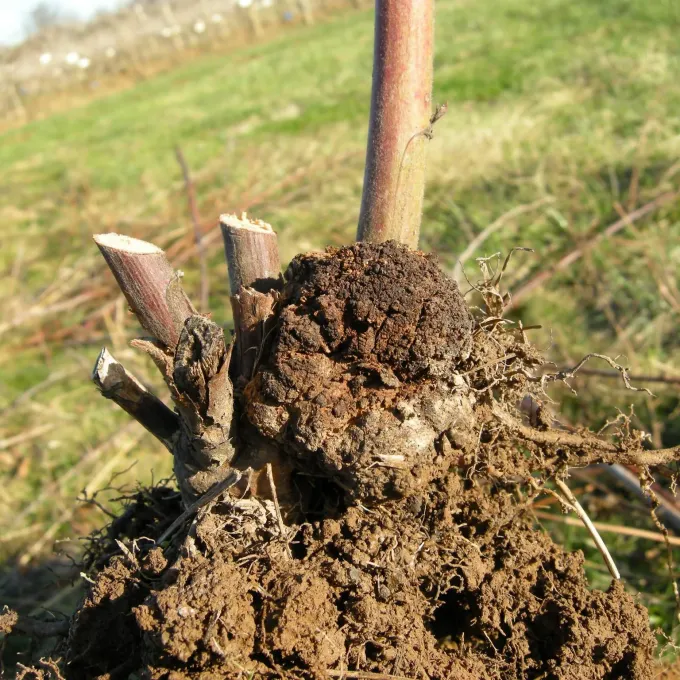
The most distinctive sign of the disease is the development of warty, tumor-like growths known as galls. These are commonly found on the crown of the plant or on the larger roots.
Young galls are soft and light-colored, but as they age, they become dark brown, hard, and woody. These structures eventually decay, releasing bacteria back into the surrounding soil environment.
Plants affected by crown gall exhibit reduced vigor, stunted growth, and yellowish leaves. The blockage of vascular tissue in the roots prevents proper nutrient and water uptake.
Heavily infected bushes are prone to premature wilting during dry weather and often fail to produce a viable crop. Over time, the root system decays, leading to the total death of the plant.
Identification often requires careful inspection of the root collar area. Growers should look for irregular, cauliflower-like masses that distinguish this disease from normal plant growth or insect damage.
Control measures
Since there is no cure for an established crown gall infection, control focuses on preventative measures. Always start with disease-free, certified nursery stock to prevent introducing the pathogen.
Avoid planting raspberries in fields where crown gall has been historically problematic. Practice a long-term rotation, avoiding susceptible crops for at least 5 to 7 years in infested soil.
Sanitation is critical. Disinfect all pruning tools with a 10% bleach solution or other appropriate disinfectants between every plant to prevent cross-contamination across the field.
Control soil pests such as nematodes and grubs, as their feeding activities create the mechanical wounds necessary for bacterial entry. Integrating biological control agents can help protect root health.
- Expose the roots to sunlight by removing infected plants and their surrounding soil.
- Use biological control products containing Agrobacterium radiobacter strain K84 for preventative treatment.
- Maintain balanced soil fertility to ensure plants have the strength to minimize the impact of minor root stresses.
Causes diseases · 2
Discussion
No discussions yet — be the first.