
Description
Symptoms
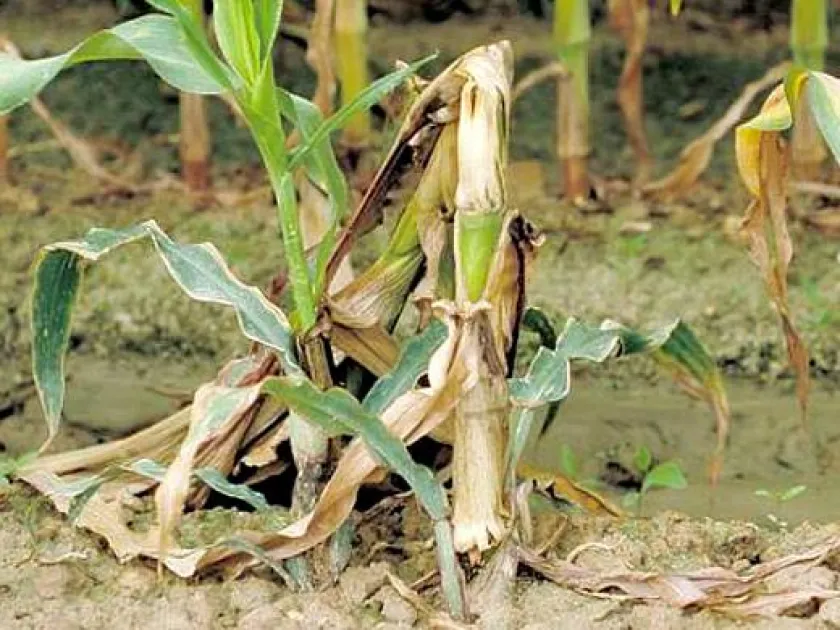
The primary symptoms appear on the lower nodes of the stalk, starting as water-soaked, olive-green to dark brown lesions.
As the infection progresses, the internal tissues of the stalk become soft, mushy, and often emit a strong, foul, fishy-like odor due to bacterial degradation.
The leaves of affected plants usually turn yellow and wilt rapidly, even if the root system remains temporarily intact.
Stalks affected by the disease are significantly weakened and often collapse or lodge under the pressure of wind or the weight of the developing ear.
Internal symptoms include the complete loss of pith structure, which eventually leaves only the outer vascular strands intact.
Pathogen
Bacterial stalk rot of corn is caused by the bacterium Pectobacterium carotovorum (formerly classified as Erwinia carotovora). This is a Gram-negative, facultative anaerobic bacterium.
The pathogen is highly effective at secreting pectinolytic enzymes, which degrade the middle lamella of plant cells, leading to tissue maceration and collapse.
This bacterium is characterized by a very broad host range, infecting various vegetable crops, fruits, and cereals, making it a persistent threat in agricultural systems.
The bacterium survives in infested crop debris, soil, and on seeds, allowing it to remain viable even during crop rotation cycles.
Dissemination occurs via splash irrigation, rainwater runoff, wind-blown moisture, and through insects that wound the stalks, facilitating bacterial entry.
Conditions for development
Bacterial stalk rot flourishes in hot and humid climates where temperatures consistently remain between 25°C and 35°C (77°F to 95°F).
Excessive rainfall or the use of heavy overhead irrigation promotes the movement of bacteria and creates ideal conditions for infection.
High nitrogen fertilization rates can result in excessive, succulent plant growth, making stalks more susceptible to mechanical injury and pathogen invasion.
Wound sites caused by insects, hail damage, or cultivation equipment act as direct entry points for the bacteria into the susceptible internal tissues.
Poor soil drainage, which keeps the stalk base constantly wet, further exacerbates the risk of rapid disease development.
Why it matters
The disease causes localized or widespread plant death, significantly reducing the overall grain yield and harvest potential.
Widespread lodging of the crop makes mechanical harvesting extremely difficult and results in significant grain losses left in the field.
Plants that do not completely collapse still suffer from impaired nutrient transport, leading to poorly filled ears and light, shriveled kernels.
Secondary infections often follow the primary bacterial attack, further degrading the quality and quantity of the harvest.
In regions with recurrent hot and humid summers, this disease can lead to catastrophic losses if not managed appropriately.
Protection
Good field drainage is essential to minimize moisture at the base of the stalks, which reduces the potential for bacterial activity.
Effective management of corn insect pests is a critical strategy to prevent wounds that serve as entry points for the bacteria.
Choosing hybrids known for strong stalks and better resistance to bacterial stalk rot can significantly mitigate economic losses.
Crop rotation to non-host species and deep incorporation of residue can help reduce the initial inoculum load in the field.
- Apply fertilizers based on soil tests to avoid nitrogen excess.
- Avoid overhead irrigation during the flowering stage.
- Sanitize farm equipment between fields to limit spread.
- Promote rapid drying of the crop environment.
Pathogens and affected parts
Affects crops · 1
Discussion
No discussions yet — be the first.