
Agrobacterium tumefaciens
Agrobacterium tumefaciens
Description
How to identify
Agrobacterium tumefaciens is a soil-borne, gram-negative bacterium belonging to the Rhizobiaceae family, widely recognized as the causal agent of crown gall disease in various plant species.
The bacterium is known for its unique ability to transfer a portion of its Ti-plasmid DNA (T-DNA) into the genome of the host plant, resulting in uncontrolled cell division and tumor formation.
It exists as a saprophyte in the soil for extended periods, remaining dormant until it detects chemical signals released by injured plant roots, which triggers the infection process.
Molecular techniques, such as PCR, are used for accurate diagnosis in agricultural settings, as visual symptoms during the early stages of the disease can be easily misidentified.
Development of the pathogen is highly sensitive to environmental factors, thriving in neutral or slightly alkaline soil conditions with adequate moisture and moderate temperatures.
What it damages
This pathogen affects a broad range of crops, including fruit trees (apples, pears, stone fruits), grapes, raspberries, roses, and various ornamental and vegetable plants.
The primary damage involves the development of galls and tumors on roots, crowns, and stems, which disrupts the plant's vascular system and impairs the transport of water and nutrients.
Infected plants suffer from stunted growth, chlorosis, reduced vigor, and increased susceptibility to other biotic and abiotic stresses, often leading to total plant death.
In nurseries, crown gall can lead to significant economic losses, as infected stock is usually discarded, and the pathogen can rapidly spread through contaminated tools and soil.
Furthermore, the presence of these tumors causes the structural integrity of the root system to decline, making plants more vulnerable to toppling in windy conditions.
When it appears
Infection typically occurs during agricultural practices that cause mechanical wounds, such as transplanting, grafting, pruning, or damage from soil-dwelling pests like nematodes.
The most favorable window for infection is during spring and autumn, when soil moisture is high and temperatures range between 15°C and 25°C, promoting active root exudate production.
Following initial infection, visible tumors may take weeks or even months to develop, depending on the host species and its physiological condition at the time of infection.
The pathogen overwinters within the soil or inside the mature galls, where it remains shielded from harsh environmental conditions and low temperatures.
Secondary spread is primarily facilitated by contaminated pruning equipment, water runoff during heavy rainfall, and the movement of infected nursery material across farm boundaries.
Signs of infestation
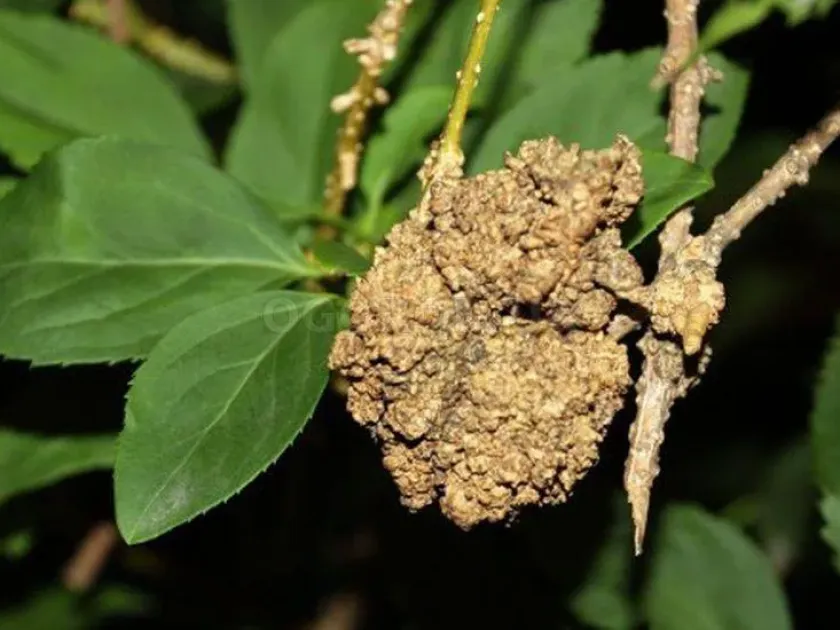
The hallmark symptom is the appearance of small, light-colored, soft galls that gradually enlarge, harden, and turn dark brown with a rough, fissured, wood-like surface.
These tumors are commonly found on the root crown or along the main roots, though they can occasionally occur on stems or branches in susceptible high-value crops.
Overall plant health declines: foliage may turn yellow, branches show poor annual extension growth, and the tree may appear generally wilted despite adequate watering.
Cross-sections of the galls reveal an undifferentiated, spongy structure lacking the organized vascular patterns found in healthy plant tissue, distinguishing them from simple callus growth.
As the galls age, they often decay, creating an environment for secondary rot-causing fungi and bacteria, which further complicates the health of the infected plant.
Control measures
Effective control is rooted in strict prevention, starting with the selection of certified disease-free planting material and rigorous quarantine procedures in nurseries.
- Sanitize all pruning tools using alcohol or bleach solutions between every plant to prevent cross-contamination.
- Practice long-term crop rotation, avoiding the replanting of susceptible species in infested soil for at least 4–5 years.
- Use biological control agents, such as specific non-pathogenic bacteria, to protect root zones during the propagation phase.
- Minimize mechanical damage to root systems during transplanting and field operations to avoid creating entry points for the pathogen.
For minor infections, surgical removal of galls followed by disinfection with copper-based solutions can be attempted, but severely infested plants must be rogued and incinerated.
Maintaining soil health through the addition of organic matter and controlling nematode populations significantly boosts the plant's defense mechanisms against Agrobacterium tumefaciens.
Causes diseases · 2
Discussion
No discussions yet — be the first.