
Description
Symptoms
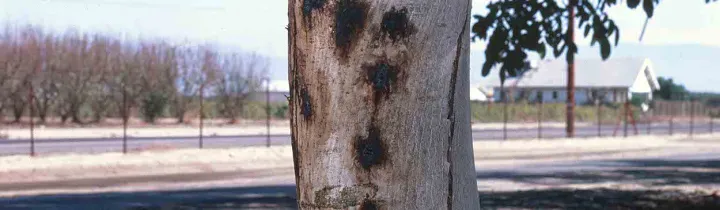
Initial symptoms are characterized by the appearance of dark, sunken lesions on the bark of trunks and scaffold branches. These lesions often expand slowly over time.
A distinctive sign of the disease is the secretion of a dark, viscous exudate from bark fissures, commonly referred to as "black weeping." This liquid dries into black streaks on the bark surface.
Underneath the affected bark, tissues typically exhibit a brown to black discoloration. In advanced stages, the internal tissues may become soft and have an unpleasant odor due to secondary decay.
Leaves on infected branches may exhibit premature yellowing and dropping. As the necrosis spreads, the affected branches lose vigor, show reduced leaf canopy, and eventually die back.
Severe infestations can lead to girdling of the trunk, which severely impacts the tree's health. If the main trunk is girdled, the entire tree will ultimately succumb to the infection.
Pathogen
The causal agent of this disease is the bacterium Erwinia nigrifluens. This pathogen is a gram-negative rod-shaped bacterium capable of systemic infection within host tissues.
The primary reservoir for this bacterium consists of infected bark tissues and debris within the orchard environment. It is known to persist in woody structures for extended periods.
The disease primarily targets walnut trees, showing increased susceptibility in trees already weakened by environmental stress or poor management practices. Pathogen entry occurs through various openings.
Activity of the bacterium is linked to moist conditions and moderate temperature ranges. Once inside, the pathogen colonizes the bark and vascular tissues, causing localized necrosis.
Dissemination is largely facilitated by splashing water, rain events, and contaminated pruning tools. Insect vectors can also play a role in spreading the bacteria between healthy trees.
Conditions for development
Prolonged wet weather during spring and early summer is the most critical factor favoring the development of this necrosis. High relative humidity promotes bacterial activity.
Optimal temperatures for the proliferation of Erwinia nigrifluens generally range between +18 and +25 degrees Celsius. These conditions often overlap with the tree's spring growth flush.
Poor orchard sanitation and overcrowding contribute to restricted airflow. This prevents bark from drying out quickly after rain, which encourages the survival of bacterial populations.
Mechanical injuries resulting from cultivation or improper pruning serve as primary entry points for the pathogen. Protecting tree trunks from damage is essential for preventing infection.
Over-fertilization with nitrogen can create soft, succulent bark tissue that is significantly more susceptible to infection by this and other pathogenic bacteria.
Why it matters
The disease causes significant harm by disrupting the flow of water and nutrients within the tree. This physiological stress reduces the overall growth rate and vigor of the walnut tree.
Yield reduction is a common consequence of chronic infection. Nut quality may decrease, and fruits on infected branches often fail to mature properly or drop prematurely.
Increased vulnerability to secondary pests and fungal pathogens is a major long-term impact. Once a tree is weakened, it becomes a focal point for further orchard health issues.
Economic losses include direct loss of yield, the cost of specialized sanitation treatments, and the potential need for premature removal of highly infected trees from the orchard.
In nurseries, the presence of Erwinia nigrifluens can lead to the rejection of entire batches of saplings. This creates major financial hurdles for nursery operators.
Protection
Sanitation is the most effective management strategy. Pruning out infected branches well below the visible symptoms is necessary to remove the source of the inoculum.
- Strictly sanitize all pruning tools with approved disinfectants between trees.
- Remove and destroy infected bark and debris from the orchard site.
- Apply copper-based fungicides as a preventative measure during the dormant season.
- Maintain balanced soil fertility to ensure strong tree natural resistance.
- Monitor and control bark-boring pests to minimize entry points for bacteria.
Orchard management should focus on improving airflow and light penetration to ensure the bark remains dry. Proper drainage is crucial to reducing humidity levels.
Early diagnosis and intervention are vital. Because systemic bacterial infections are difficult to treat, preventing the initial spread is the cornerstone of effective disease management.
If an infection is detected, quarantine the affected tree immediately and ensure that all equipment used on it is fully disinfected before moving to healthy parts of the orchard.
Pathogens and affected parts
Affects crops · 1
Discussion
No discussions yet — be the first.