
Description
Symptoms
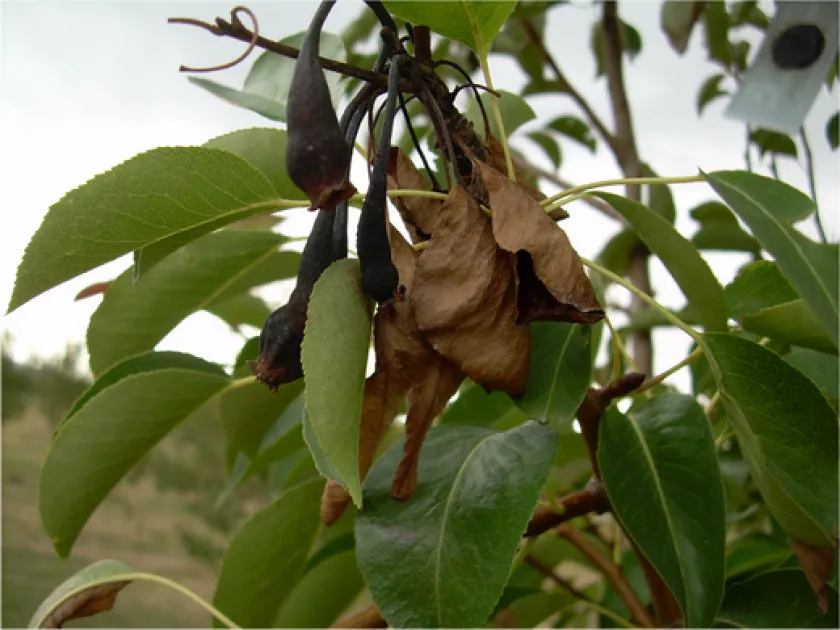
The first clinical signs of rhizomatosis include yellowing and premature wilting of the leaves, which rapidly lose turgor pressure. Symptoms may initially appear on specific shoots before spreading systemically throughout the plant.
Cross-sections of affected stems or rhizomes reveal distinct browning or blackening of the vascular bundles. In advanced stages, the plant tissues release a pungent, foul-smelling bacterial exudate.
In banana plants, the infection manifests as rot within the pseudostem and rhizome. The internal tissues turn soft, watery, and lose structural integrity, eventually causing the plant to collapse or topple over.
While symptoms can be confused with Fusarium wilt, rhizomatosis lacks the characteristic internal pink vascular discoloration. Instead, it is defined by a slimy decomposition of internal tissues and death of the growing point.
- Yellowing and drooping of leaves.
- Darkened vascular rings visible on stem cross-sections.
- Foul-smelling bacterial ooze or slime.
- Soft, watery rot of rhizomes and lower stems.
- Complete plant collapse and death in severe cases.
Pathogen
Rhizomatosis is a destructive bacterial disease caused by various species within the Erwinia genus. These Gram-negative, rod-shaped, facultative anaerobic bacteria are highly effective at degrading plant tissues through enzymatic activity.
The disease is classified as a bacterial wilt or soft rot. The pathogen invades host plants through natural openings, such as stomata or lenticels, or via mechanical wounds caused by pests, weather damage, or agricultural tools.
Once inside, Erwinia spp. colonize the vascular system, obstructing the flow of water and nutrients. The bacteria secrete powerful pectolytic enzymes that break down the middle lamella of cell walls, leading to tissue maceration and collapse.
The pathogen is highly persistent, capable of surviving for long periods in soil, plant debris, and on farm equipment. This persistence makes it a recurring threat for growers in regions with favorable climate conditions.
Rhizomatosis affects a wide range of agricultural crops. In tropical fruit production, particularly for bananas, the pathogen causes severe systemic infection, often referred to as bacterial wilt, leading to rapid plant decay.
Conditions for development
Rhizomatosis thrives in conditions of high temperature and high soil moisture. Bacterial activity is optimal between +25°C and +30°C, making it a critical issue in tropical and subtropical agriculture.
Poorly drained soils or waterlogged fields create an ideal environment for the multiplication and dispersal of Erwinia bacteria. Dense soils with low oxygen availability significantly exacerbate root rot progression.
Mechanical trauma is the primary pathway for infection. Pruning, weeding, and harvesting activities provide the necessary entry points for the bacteria if strict hygiene protocols are not maintained.
Insects act as significant vectors, transferring the pathogen from infected plants to healthy ones. Their feeding activities not only damage tissue but also directly inoculate the plants with the bacterial load.
High planting density promotes the rapid spread of the disease through contact. In the absence of crop rotation, the soil becomes increasingly infested, making the cultivation of susceptible varieties highly risky.
Why it matters
The economic impact of rhizomatosis is severe, as the disease can result in 80–100% crop loss in affected fields. Its rapid onset and systemic nature make containment difficult once an outbreak begins.
Infected crops lose all commercial value. Fruit or vegetative parts affected by bacterial rot become unmarketable and undergo rapid decomposition, making storage and transport impossible.
Land infested with Erwinia requires long-term management and strict sanitation. Farmers may be forced to abandon susceptible crops on the affected land for several seasons to allow the bacterial population to decline.
Secondary infections often occur during post-harvest storage, where a single contaminated item can ruin entire shipments. This imposes significant losses on producers and export distributors.
For perennial crops like bananas, rhizomatosis leads to the destruction of the entire plantation. The costs of eradication, land preparation, and replanting impose massive financial burdens on agricultural enterprises.
Protection
Strict phytosanitary practices are the cornerstone of rhizomatosis management. Regular field monitoring is essential for the early detection and immediate removal of symptomatic plants along with their root systems.
Tool disinfection is mandatory. All cutting tools must be sterilized with appropriate agents, such as bleach or high-grade alcohol, between plants to prevent mechanical transmission of the pathogen.
Using certified, disease-free planting material is the most effective preventative measure. Whenever possible, farmers should integrate resistant or tolerant varieties into their production systems.
Agronomic improvements such as enhanced drainage and precision irrigation are vital to prevent waterlogging. Reducing excess nitrogen fertilization helps keep cell walls robust, making the plant less susceptible to infection.
Biological control agents, such as antagonistic bacteria, show promise in reducing infection pressure in the soil. Chemical control is generally limited, but copper-based compounds may provide some protection as part of a integrated strategy.
Pathogens and affected parts
Affects crops · 1
Discussion
No discussions yet — be the first.