

SKU #59301
·
41 views
Vekha
Wheat
User rating
0 votes0% positive reviews
No ratings yet — be the first.
Type of Development
Winter wheat
Wheat Type
Soft wheat variety
Ostistost'
Ostistaya
Plant; height
100-110 cm
Store offers · 1 from 1 stores
Prices are updated on loadLoading offers…
Available at: Транс Агро
Aggregator catalog: prices are collected automatically from store websites, normalized by AI and converted at the current exchange rate. Before ordering, confirm the price and availability on the store's website. This block is not indexed by search engines — the data is loaded after the page opens.
About product

VEKHA is a variety of soft winter wheat (Triticum aestivum L.) developed by Russian breeders of the National Grain Center. It belongs to medium-early maturing and medium-height varieties with plant heights up to 105-110 cm on a high agro-background. The variety is characterized by resistance to lodging, which ensures crop stability. The ear is cylindrical, of medium density, 8.5-10 cm long, with a…
Type of Development
Winter wheat
Wheat Type
Soft wheat variety
Ostistost'
Ostistaya
Plant; height
100-110 cm
Description
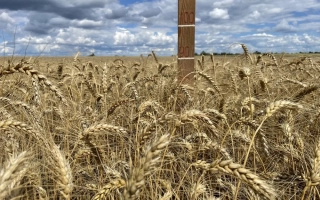
VEKHA is a variety of soft winter wheat (Triticum aestivum L.) developed by Russian breeders of the National Grain Center. It belongs to medium-early maturing and medium-height varieties with plant heights up to 105-110 cm on a high agro-background. The variety is characterized by resistance to lodging, which ensures crop stability. The ear is cylindrical, of medium density, 8.5-10 cm long, with awn-like appendages in the upper third. The grain is egg-shaped, of medium size, red in color, with the weight of 1000 grains ranging from 36 to 46 grams. The grain base is bare, and the groove is not deep. VEKHA has high tillering and ear density, while ear productivity is average. The variety differs in high yield and resistance to main wheat diseases. It is resistant to brown, yellow, and stem rust, powdery mildew, and septoria, while moderately susceptible to head smut and susceptible to viral diseases. The variety's frost resistance is average, and drought resistance is high, making it suitable for cultivation under various climatic conditions. Potential yield according to the breeder's data exceeds 110 centners per hectare, while the average yield in variety trials reached 107.5 centners per hectare, which is significantly higher than standard varieties. VEKHA is recommended for cultivation in regions with a moderate climate, such as the Republic of Adygea, Krasnodar, and Stavropol Krais, as well as the Azov and Southern zones of Rostov Oblast. The variety can be sown in autumn at optimal times or in spring at initial sowing times. The sowing rate is about 5 million germinating seeds per hectare. Due to good milling and baking qualities of the grain, the variety belongs to the class of valuable wheats and is suitable for producing quality flour and bakery products.
Crop & resistance
Crop
Disease resistance
Specifications hover over for a hint about the specification
| Type of Development | |
|---|---|
|
Wheat Type
Wheat Type
Biologically hard wheat differs from soft wheat in its greater demand for soil fertility and agronomic conditions (especially regarding field cleanliness from weeds), lower drought resistance and plasticity, relatively weaker root development, especially nodal roots, and lower ti... |
|
| Ostistost' | |
| Plant; height | 100-110 cm |
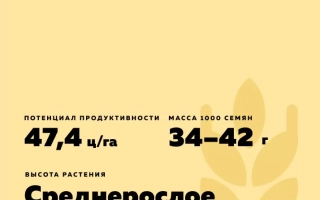
| Seed: mass 1.000 pcs seeds | 35-40 grams |
| Resistance to lodging | |
| Potential Yield | 10-11 tons |
| Number of productive stems per hectare | 4.5-5.0 million pcs |
| Registration year | 2017 |
| Catalog | Catalog → Wheat |
| Legal data |
Show · 1 |
| Country | Russia |
Not yet комментариев. Be the first!
Alternatives
Wheat seeds · similar varieties


See also
Often considered together with this variety



Recently viewed
Products you’ve viewed on this site
Reviews · 0