


SKU #59898
·
27 views
SINIORA
Wheat
User rating
0 votes0% positive reviews
No ratings yet — be the first.
Type of Development
Winter wheat
Wheat Type
Hard wheat
Growing Season
90-100 days
Plant; height
60-70 cm
About product

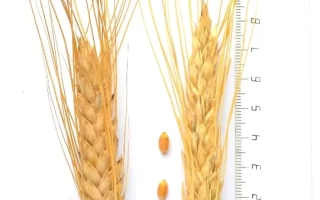
The winter hard durum wheat variety Siniora is a mid-season and mid-height variety developed to produce high-quality grain primarily intended for the manufacture of pasta and cereal products. This variety is characterized by a short stem and high resistance to lodging, which helps preserve the yield and improve its quality. Siniora matures 2-3 days earlier than the variety Krupinka, allowing for t…
Type of Development
Winter wheat
Wheat Type
Hard wheat
Growing Season
90-100 days
Plant; height
60-70 cm
Description
The winter hard durum wheat variety Siniora is a mid-season and mid-height variety developed to produce high-quality grain primarily intended for the manufacture of pasta and cereal products. This variety is characterized by a short stem and high resistance to lodging, which helps preserve the yield and improve its quality. Siniora matures 2-3 days earlier than the variety Krupinka, allowing for the optimization of harvest timing and increased efficiency of agrotechnical measures.
Siniora wheat exhibits high resistance to a range of diseases, including yellow and brown rust, powdery mildew, septoria, and viral infections, which significantly reduces the risk of yield losses. Additionally, the variety demonstrates high drought resistance and above-average winter hardiness, making it suitable for cultivation under various climatic conditions. It is recommended to sow this variety after the best predecessors, such as fallow land (black and occupied), perennial forage crops, peas, and rapeseed, at a sowing rate of 4.0-5.0 million viable seeds per hectare.
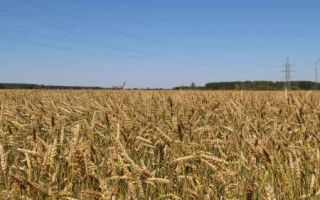
The Siniora variety is recommended for cultivation in the Central Black Earth, North Caucasus, and Lower Volga regions of Russia, as well as in the Lipetsk region, the Southern and Eastern zones of the Rostov region, the Krasnodar region, and the Kalmykia Republic. The yield of the variety averages about 95.6 centners/ha with maximum values up to 109.6 centners/ha, which confirms its high productivity and economic attractiveness for farmers. Thanks to its qualities and adaptability, Siniora wheat is widely used in seed material for agricultural enterprises and farms.
Siniora wheat exhibits high resistance to a range of diseases, including yellow and brown rust, powdery mildew, septoria, and viral infections, which significantly reduces the risk of yield losses. Additionally, the variety demonstrates high drought resistance and above-average winter hardiness, making it suitable for cultivation under various climatic conditions. It is recommended to sow this variety after the best predecessors, such as fallow land (black and occupied), perennial forage crops, peas, and rapeseed, at a sowing rate of 4.0-5.0 million viable seeds per hectare.
The Siniora variety is recommended for cultivation in the Central Black Earth, North Caucasus, and Lower Volga regions of Russia, as well as in the Lipetsk region, the Southern and Eastern zones of the Rostov region, the Krasnodar region, and the Kalmykia Republic. The yield of the variety averages about 95.6 centners/ha with maximum values up to 109.6 centners/ha, which confirms its high productivity and economic attractiveness for farmers. Thanks to its qualities and adaptability, Siniora wheat is widely used in seed material for agricultural enterprises and farms.
Crop & resistance
Crop
Disease resistance
Specifications hover over for a hint about the specification
| Type of Development | |
|---|---|
|
Wheat Type
Wheat Type
Biologically hard wheat differs from soft wheat in its greater demand for soil fertility and agronomic conditions (especially regarding field cleanliness from weeds), lower drought resistance and plasticity, relatively weaker root development, especially nodal roots, and lower ti... |
|
| Growing Season | 90-100 days |
| Plant; height | 60-70 cm |
|
Grain: gluten content
Grain: gluten content
Raw gluten of grain is a hydrated protein and consists of water-insoluble protein fractions, as well as a small amount of starch, fats, and other substances firmly bound by proteins. Since gluten is primarily composed of proteins, its yield and quality depend on the quantity and... |
More than 30% |
| Winter Hardiness, Ratings (9-1) | 8 |
| Resistance to lodging | |
| Potential Yield | 9-10 tons |
| Number of productive stems per hectare | 4.0-4.5 million pcs |
| Registration year | 2022 |
| Catalog | Catalog → Wheat |
| Legal data |
Show · 1 |
| Country | Russia |
Store offers
Prices are updated on loadLoading offers…
Aggregator catalog: prices are collected automatically from store websites, normalized by AI and converted at the current exchange rate. Before ordering, confirm the price and availability on the store's website. This block is not indexed by search engines — the data is loaded after the page opens.
Not yet комментариев. Be the first!
Alternatives
Wheat seeds · similar varieties




See also
Often considered together with this variety




Recently viewed
Products you’ve viewed on this site
Reviews · 0