


SKU #37281
·
36 views
Khersonskaya Bezosta
Wheat
User rating
0 votes0% positive reviews
No ratings yet — be the first.
Type of Development
Winter wheat
Wheat Type
Soft wheat variety
Ostistost'
Without stop
Plant; height
40-50 cm
About product

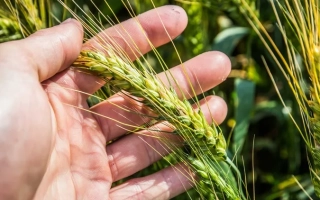
Khersonskaya Bezosta is a winter soft wheat variety belonging to the lutescens group. The plant is low-growing with a white, awnless, cylindrical ear of medium density, 7.5–8.5 cm long. The ear has a medium density — 17.5–21.5 spikelets per 10 cm of spike axis, with short awn-like tips at the apex. The lower lemma's shoulder is straight, medium width, egg-shaped, with a straight and short tooth. T…
Type of Development
Winter wheat
Wheat Type
Soft wheat variety
Ostistost'
Without stop
Plant; height
40-50 cm
Description
Khersonskaya Bezosta is a winter soft wheat variety belonging to the lutescens group. The plant is low-growing with a white, awnless, cylindrical ear of medium density, 7.5–8.5 cm long. The ear has a medium density — 17.5–21.5 spikelets per 10 cm of spike axis, with short awn-like tips at the apex. The lower lemma's shoulder is straight, medium width, egg-shaped, with a straight and short tooth. The grain is red, egg-shaped with a shallow groove and short awns. The 1000-grain weight ranges from 40–52 g.
This variety is characterized by high adaptability and productive potential, developed for steppe ecological groups. It exhibits early germination, high winter hardiness, and resistance to lodging (7–8 points), ensuring reliable yields. Khersonskaya Bezosta has enhanced drought tolerance and good resistance to major diseases such as root rot, septoria, fusarium, brown rust, and powdery mildew, with resistance ratings of 6 points.
Recommended for cultivation in the North Caucasus and Crimea, including irrigated areas and various preceding crops. The seeding rate is 4.5–5.0 million viable seeds per hectare, with the optimal sowing period from the third decade of September to the beginning of October. Yield potential reaches up to 60 centners per hectare. The grain has good baking qualities, making this variety valuable for agriculture and production of quality flour.
This variety is characterized by high adaptability and productive potential, developed for steppe ecological groups. It exhibits early germination, high winter hardiness, and resistance to lodging (7–8 points), ensuring reliable yields. Khersonskaya Bezosta has enhanced drought tolerance and good resistance to major diseases such as root rot, septoria, fusarium, brown rust, and powdery mildew, with resistance ratings of 6 points.
Recommended for cultivation in the North Caucasus and Crimea, including irrigated areas and various preceding crops. The seeding rate is 4.5–5.0 million viable seeds per hectare, with the optimal sowing period from the third decade of September to the beginning of October. Yield potential reaches up to 60 centners per hectare. The grain has good baking qualities, making this variety valuable for agriculture and production of quality flour.
Crop & resistance
Crop
Disease resistance
Specifications hover over for a hint about the specification
| Type of Development | |
|---|---|
|
Wheat Type
Wheat Type
Biologically hard wheat differs from soft wheat in its greater demand for soil fertility and agronomic conditions (especially regarding field cleanliness from weeds), lower drought resistance and plasticity, relatively weaker root development, especially nodal roots, and lower ti... |
|
| Ostistost' | |
| Plant; height | 40-50 cm |
| Seed: mass 1.000 pcs seeds | 40-45 grams |
| Winter Hardiness, Ratings (9-1) | 7, 8 |
| Resistance to lodging | |
| Potential Yield | 6-7 tons |
| Number of productive stems per hectare | 4.5-5.0 million pcs |
| Registration year | 2002 |
| Catalog | Catalog → Wheat |
| Legal data |
Show · 1
|
| Country | Ukraine |
Store offers
Prices are updated on loadLoading offers…
Aggregator catalog: prices are collected automatically from store websites, normalized by AI and converted at the current exchange rate. Before ordering, confirm the price and availability on the store's website. This block is not indexed by search engines — the data is loaded after the page opens.
Not yet комментариев. Be the first!
Alternatives
Wheat seeds · similar varieties






See also
Often considered together with this variety



Recently viewed
Products you’ve viewed on this site
Reviews · 0