
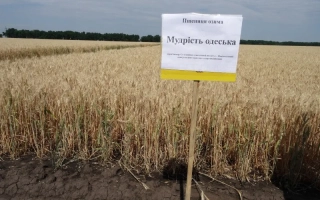


SKU #59364
·
47 views
ZIMUSHKA
Wheat
User rating
0 votes0% positive reviews
No ratings yet — be the first.
Type of Development
Winter wheat
Wheat Type
Soft wheat variety
Growing Season
100-110 days
Winter Hardiness, Ratings (9-1)
8
About product

Reliable winter soft wheat variety with high cold tolerance and robust genetic resistance to key diseases.
Type of Development
Winter wheat
Wheat Type
Soft wheat variety
Growing Season
100-110 days
Winter Hardiness, Ratings (9-1)
8
Description
Resilience and Productivity: The Profile of 'Zimushka' Wheat
The 'Zimushka' winter soft wheat variety is a product of professional breeding by the Federal Altai Scientific Center for Agrobiotechnologies. Developed specifically for regions with challenging climatic conditions, this variety focuses on balancing cold hardiness with consistent production potential. In optimal growing conditions, the variety is capable of delivering yields of 7–8 tonnes per hectare.
Key Performance Metrics
With a vegetation period of 100–110 days, 'Zimushka' integrates well into various crop rotation cycles. Its winter hardiness rating of 8 out of 9 points ensures reliability during volatile winter seasons. The variety is characterized by high productive tillering, reaching 4.5–5.0 million stalks per hectare. Furthermore, its good resistance to lodging ensures efficient mechanical harvesting with minimal field losses.
Phytosanitary Protection
The strength of 'Zimushka' lies in its genetic resistance to a wide range of common grain pathogens:
- High resistance to wheat leaf rust, septoria, and root rot.
- Effective tolerance against mycospherella leaf spot, fusarium, and powdery mildew.
This inherent genetic protection allows farmers to optimize their fungicide programs, reducing the overall pesticide load on the fields. In the current market, 'Zimushka' maintains a reputation as a dependable choice for agricultural enterprises looking to stabilize yields and mitigate risks associated with extreme temperatures and disease pressure. It is a proven, high-performance variety designed for stable production of quality wheat.
Crop & resistance
Crop
Disease resistance
Specifications hover over for a hint about the specification
| Type of Development | |
|---|---|
|
Wheat Type
Wheat Type
Biologically hard wheat differs from soft wheat in its greater demand for soil fertility and agronomic conditions (especially regarding field cleanliness from weeds), lower drought resistance and plasticity, relatively weaker root development, especially nodal roots, and lower ti... |
|
| Growing Season | 100-110 days |
| Winter Hardiness, Ratings (9-1) | 8 |
| Resistance to lodging | |
| Potential Yield | 7-8 tons |
| Number of productive stems per hectare | 4.5-5.0 million pcs |
| Registration year | 2015 |
| Catalog | Catalog → Wheat |
| Legal data |
Show · 10
|
| Country | Russia |
Store offers
Prices are updated on loadLoading offers…
Aggregator catalog: prices are collected automatically from store websites, normalized by AI and converted at the current exchange rate. Before ordering, confirm the price and availability on the store's website. This block is not indexed by search engines — the data is loaded after the page opens.
Not yet комментариев. Be the first!
Alternatives
Wheat seeds · similar varieties




See also
Often considered together with this variety





Recently viewed
Products you’ve viewed on this site
Reviews · 0