

SKU #59834
·
35 views
BELYANKA
Wheat
Federal Agrarian Scientific Center of the South-EastUser rating
0 votes0% positive reviews
No ratings yet — be the first.
Type of Development
Spring wheat
Wheat Type
Soft wheat variety
Growing Season
80-90 days
Seed: mass 1.000 pcs seeds
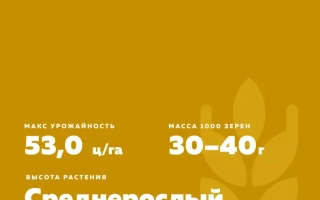
30-35 grams, 35-40 grams
About product

The Belyanka variety of spring soft wheat was created at the Scientific Research Institute of Agriculture of the South-East and was included in the State Register for the Lower Volga Region starting in 1999. It represents an album variety with an erect or semi-erect culm and a medium-thickness hollow straw. The ear is cylindrical, white in color, ranging from loose to medium density, with a distin…
Type of Development
Spring wheat
Wheat Type
Soft wheat variety
Growing Season
80-90 days
Seed: mass 1.000 pcs seeds
30-35 grams, 35-40 grams
Description
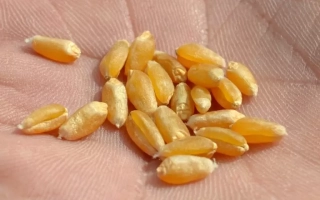
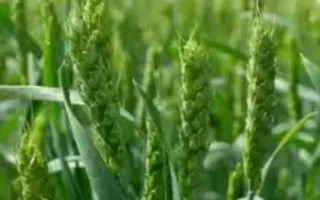
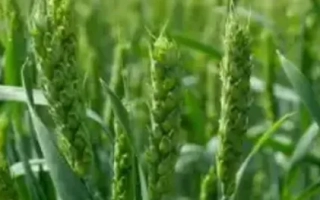
The Belyanka variety of spring soft wheat was created at the Scientific Research Institute of Agriculture of the South-East and was included in the State Register for the Lower Volga Region starting in 1999. It represents an album variety with an erect or semi-erect culm and a medium-thickness hollow straw. The ear is cylindrical, white in color, ranging from loose to medium density, with a distinct medium waxy coating. The grain is elongated-ovoid in shape, white, medium-sized, and vitreous, with a 1000-grain mass varying from 30 to 42 grams. The vegetative period is 81-90 days; the variety is mid-maturing, ripening a few days later than standard Saratov series varieties. Belyanka is distinguished by high resistance to diseases, particularly leaf brown rust, to which it shows high resistance, as well as powdery mildew and powdery smut, while seed treatment against covered smut is required. The variety is tolerant to viral diseases and possesses above-average resistance to lodging, as well as drought tolerance. These qualities make it especially suitable for cultivation in the Right-Bank, Volga Region areas, and neighboring regions, where it demonstrates high competitiveness. The Belyanka variety is characterized by high productivity potential and good milling qualities of the grain, ensuring its commercial value. Yield in the Lower Volga Region reaches an average of 14.4 centners per hectare, while in the Saratov region it can range from 19 to 33 centners per hectare, with maximum figures reaching up to 52.6 centners per hectare. The bran of the variety is white and can be used as a dietary product. High yield and disease resistance ensure a stable and high income from each sown hectare.
Crop & resistance
Crop
Disease resistance
Specifications hover over for a hint about the specification
| Type of Development | |
|---|---|
|
Wheat Type
Wheat Type
Biologically hard wheat differs from soft wheat in its greater demand for soil fertility and agronomic conditions (especially regarding field cleanliness from weeds), lower drought resistance and plasticity, relatively weaker root development, especially nodal roots, and lower ti... |
|
| Growing Season | 80-90 days |
| Seed: mass 1.000 pcs seeds | 30-35 grams, 35-40 grams |
| Resistance to lodging | |
| Potential Yield | 9-10 tons, 10-11 tons |
| Registration year | 1999 |
| Catalog | Catalog → Wheat |
| Manufacturer | Federal Agrarian Scientific Center of the South-East |
| Legal data |
Show · 13
|
| Country | Russia |
Store offers
Prices are updated on loadLoading offers…
Aggregator catalog: prices are collected automatically from store websites, normalized by AI and converted at the current exchange rate. Before ordering, confirm the price and availability on the store's website. This block is not indexed by search engines — the data is loaded after the page opens.
Not yet комментариев. Be the first!
Alternatives
Wheat seeds · similar varieties





See also
Often considered together with this variety




CANDLES
ФГБНУ Федеральный Аграрный Научный Центр Северо-востока имени Н.В. Рудницкого
032 1 offer
4.24 € ≈ 219 ₴


Recently viewed
Products you’ve viewed on this site
Reviews · 0