
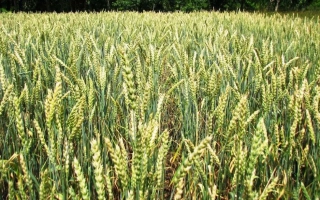

SKU #59854
·
39 views
Aria
Wheat
User rating
0 votes0% positive reviews
No ratings yet — be the first.
Type of Development
Spring wheat
Wheat Type
Soft wheat variety
Growing Season
80-90 days
Plant; height
70-80 cm
About product

A high-yielding, early-maturing spring wheat variety with strong disease resistance and reliable grain quality for intensive farming.
Type of Development
Spring wheat
Wheat Type
Soft wheat variety
Growing Season
80-90 days
Plant; height
70-80 cm
Description
Operating Guidelines for Araya Spring Wheat
For farm managers operating in regions with compressed growing seasons, the 'Araya' spring wheat variety (developed by UrFANITS) offers a pragmatic solution. With a maturity window of 80–90 days, it is designed to mitigate the risks associated with early autumn frosts. This soft wheat variety is engineered for reliability and high productivity.
Field Performance and Disease Management
From an operational standpoint, the 70–80 cm plant height makes harvesting straightforward, reducing wear on machinery. While its lodging resistance is rated as average, proper nitrogen management ensures the crop stands well, allowing you to hit yield targets of 5–6 tons per hectare.
One of the key operational advantages is the variety’s robust disease resistance profile. By maintaining natural tolerance to wheat leaf rust, Fusarium head blight, and powdery mildew, the crop reduces the urgency and frequency of emergency fungicide applications. It also exhibits effective resistance against Septoria leaf blotch, which helps in maintaining a cleaner, healthier crop canopy throughout the season.
Grain Quality and Marketability
The variety delivers consistent results at the silo. With a thousand-grain weight of 35–40 grams, the grain is well-filled and efficient to process. The gluten content of 25–30% meets standard market quality expectations, ensuring the harvest remains a profitable asset for any commercial farming enterprise.
Crop & resistance
Crop
Disease resistance
Specifications hover over for a hint about the specification
| Type of Development | |
|---|---|
|
Wheat Type
Wheat Type
Biologically hard wheat differs from soft wheat in its greater demand for soil fertility and agronomic conditions (especially regarding field cleanliness from weeds), lower drought resistance and plasticity, relatively weaker root development, especially nodal roots, and lower ti... |
|
| Growing Season | 80-90 days |
| Plant; height | 70-80 cm |
| Seed: mass 1.000 pcs seeds | 35-40 grams |
|
Grain: gluten content
Grain: gluten content
Raw gluten of grain is a hydrated protein and consists of water-insoluble protein fractions, as well as a small amount of starch, fats, and other substances firmly bound by proteins. Since gluten is primarily composed of proteins, its yield and quality depend on the quantity and... |
25-30% |
| Resistance to lodging | |
| Potential Yield | 5-6 tons |
| Registration year | 2004 |
| Catalog | Catalog → Wheat |
| Legal data | |
| Country | Russia |
Store offers
Prices are updated on loadLoading offers…
Aggregator catalog: prices are collected automatically from store websites, normalized by AI and converted at the current exchange rate. Before ordering, confirm the price and availability on the store's website. This block is not indexed by search engines — the data is loaded after the page opens.
Not yet комментариев. Be the first!
Alternatives
Wheat seeds · similar varieties


STOLYPINSKAYA
ФГБОУ ВО Омский государственный аграрный университет имени П.А. Столыпина
047 2 offers
47.45 € ≈ 2 450 ₴




See also
Often considered together with this variety





Recently viewed
Products you’ve viewed on this site
Reviews · 0