


SKU #47172
·
65 views
Prostor
Triticale
User rating
0 votes0% positive reviews
No ratings yet — be the first.
Type
Winter triticale
Registration year
1991
About product

A reliable triticale variety featuring strong natural immunity and high resistance to lodging.
Type
Winter triticale
Registration year
1991
Description
Stable yields in challenging conditions
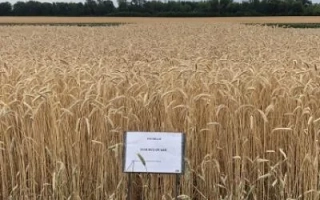
The winter triticale variety "Prostor" is the choice for farmers tired of constant battles against crop pathogens. In the field, this variety has proven to be a predictable and reliable asset. Unlike sensitive wheat, "Prostor" tolerates various technical shortcomings while maintaining high productivity potential.
Phytosanitary shield
The main reason we value this variety is its inherent resistance. Forget about endless spraying passes to prevent epiphytotic outbreaks. The variety demonstrates powerful immunity against:
- brown rust;
- septoria;
- fusarium head blight;
- powdery mildew.
These are not just figures from the originator’s documentation, but real savings on fungicides. Less chemical intervention means a lower production cost per ton of grain.
Operability and maintenance
The selection work by the Plant Breeding and Genetics Institute (Odesa) was designed to ensure adaptability to Ukrainian soil and climatic conditions. We note its excellent tillering and stand uniformity, which significantly simplifies harvesting. The combine moves smoothly with minimal losses because the variety is lodging-resistant. The grain forms large, heavy, and well-filled, with excellent test weight, which is highly valued at the grain elevator.
For the operator, this means a predictable workflow and no surprises like a "lodged field" after summer downpours. Stable results with minimal resource allocation for crop "treatment" make "Prostor" a cost-effective tool for commercial farming.
Crop & resistance
Disease resistance
Specifications hover over for a hint about the specification
|
Type
Type
Galia (Galia) type — relatively new, of Israeli origin, although there are indications that this variety may originate from Spain. The fruits of this type are round or oval, weighing about 1 kg. The surface is smooth, covered with a delicate, connected netting, turning yellow whe... |
|
|---|---|
| Registration year | 1991 |
| Catalog | Catalog → Triticale |
| Legal data |
Show · 1
|
| Country | Ukraine |
Store offers
Prices are updated on loadLoading offers…
Aggregator catalog: prices are collected automatically from store websites, normalized by AI and converted at the current exchange rate. Before ordering, confirm the price and availability on the store's website. This block is not indexed by search engines — the data is loaded after the page opens.
Not yet комментариев. Be the first!
Alternatives
Triticale seeds · similar varieties




See also
Often considered together with this variety



Recently viewed
Products you’ve viewed on this site
Reviews · 0