


SKU #47184
·
75 views
Vuiko
Triticale
User rating
0 votes0% positive reviews
No ratings yet — be the first.
Type
Winter triticale
Registration year
2017
About product

A hardy winter variety featuring high frost resistance, reliable harvest performance, and minimal lodging risks.
Type
Winter triticale
Registration year
2017
Description
Operational insight: Cultivating «Vuyko» winter triticale
For any farm manager, selecting seed material is about balancing potential yield with operational reliability. The «Vuyko» variety, developed by the Nosivka Selection and Research Station, has proven itself as a robust, dependable tool for those prioritizing stability in volatile climatic conditions.
Agronomic performance and field management
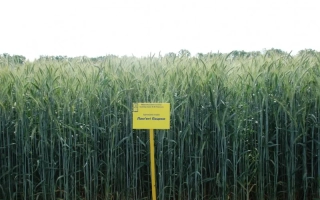
From an operator's perspective, the strength of «Vuyko» lies in its adaptability. The variety shows excellent tillering capacity and growth vigor, ensuring a dense canopy before entering winter dormancy. Throughout the growing season, it responds well to standard management practices, while its genetic resistance to lodging significantly simplifies the harvesting process.
- Stress tolerance: The variety exhibits high cold and frost resistance, minimizing the risk of crop failure during extreme temperature fluctuations in the winter-spring transition.
- Harvest efficiency: Its short, sturdy stalk makes it ideal for combine harvesting. Even under adverse weather conditions, the crop stays upright, and the lack of shattering ensures that losses during harvest are kept to a minimum, giving the team extra time to complete operations.
- Resource utilization: «Vuyko» efficiently utilizes applied fertilizers, consistently converting inputs into high-quality grain, whether for feed or processing purposes.
Managing fields with «Vuyko» does not require specialized equipment or complex technical procedures. A standard schedule of fungicide and fertilizer applications during the tillering and jointing stages is sufficient to reach the full potential of the crop. «Vuyko» is a solid choice for those who value field predictability and simplicity in their daily production cycle.
Specifications hover over for a hint about the specification
|
Type
Type
Galia (Galia) type — relatively new, of Israeli origin, although there are indications that this variety may originate from Spain. The fruits of this type are round or oval, weighing about 1 kg. The surface is smooth, covered with a delicate, connected netting, turning yellow whe... |
|
|---|---|
| Registration year | 2017 |
| Catalog | Catalog → Triticale |
| Legal data |
Show · 1
|
| Country | Ukraine |
Store offers
Prices are updated on loadLoading offers…
Aggregator catalog: prices are collected automatically from store websites, normalized by AI and converted at the current exchange rate. Before ordering, confirm the price and availability on the store's website. This block is not indexed by search engines — the data is loaded after the page opens.
Not yet комментариев. Be the first!
Alternatives
Triticale seeds · similar varieties




See also
Often considered together with this variety




Recently viewed
Products you’ve viewed on this site
Reviews · 0