


SKU #47177
·
63 views
Harróza
Triticale
User rating
0 votes0% positive reviews
No ratings yet — be the first.
Type
Winter triticale
Registration year
2011
About product

A reliable choice for stable yields with minimal expenditure on fungicide protection.
Type
Winter triticale
Registration year
2011
Description
Betting on Stability: Field Experience with 'Harroza' Winter Triticale
When the rotation goal is to extract maximum forage or quality grain per hectare, the choice of variety moves from agronomic theory to operational efficiency. Developed by the V. Ya. Yuriev Plant Production Institute, 'Harroza' is a reliable workhorse that forgives many irregularities in the technology map.
Operational Performance and Resistance
For an agronomist, 'Harroza' is convenient due to its predictability. In field conditions, the variety demonstrates an excellent immunological response. Over several seasons of observation, we have recorded a high resistance threshold against key pathogens:
- Wheat leaf rust: minimal investment in fungicide applications even during epiphytotic years.
- Septoria and powdery mildew: the crop effectively suppresses fungal development, allowing for reduced spraying intensity.
- Fusarium head blight: high resistance significantly reduces the risks of crop rejection upon delivery to the elevator.
These metrics substantially reduce operating costs per hectare. While other varieties might require three rounds of fungicide protection, two passes are often sufficient to keep the phytosanitary background within the desired range.
Field Technology and Handling
This type of winter triticale is designed for performance. It features strong tillering, quickly covers the nutrition area, and competes successfully against weeds, which notably simplifies herbicide management. Harvesting is straightforward: the variety shows excellent lodging resistance, and the heads hold the grain firmly, preventing shattering even if harvest is slightly delayed. In terms of machinery, 'Harroza' requires no specialized combine settings; standard threshing modes handle the crop without losses, ensuring clean grain in the hopper and high equipment efficiency across the fields.
Crop & resistance
Disease resistance
Specifications hover over for a hint about the specification
|
Type
Type
Galia (Galia) type — relatively new, of Israeli origin, although there are indications that this variety may originate from Spain. The fruits of this type are round or oval, weighing about 1 kg. The surface is smooth, covered with a delicate, connected netting, turning yellow whe... |
|
|---|---|
| Registration year | 2011 |
| Catalog | Catalog → Triticale |
| Legal data |
Show · 1
|
| Country | Ukraine |
Store offers
Prices are updated on loadLoading offers…
Aggregator catalog: prices are collected automatically from store websites, normalized by AI and converted at the current exchange rate. Before ordering, confirm the price and availability on the store's website. This block is not indexed by search engines — the data is loaded after the page opens.
Not yet комментариев. Be the first!
Alternatives
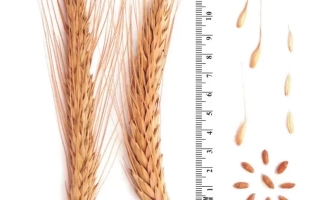
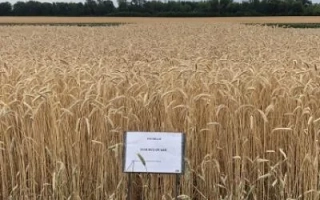
Triticale seeds · similar varieties



See also
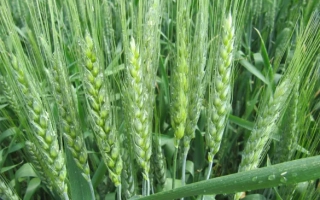
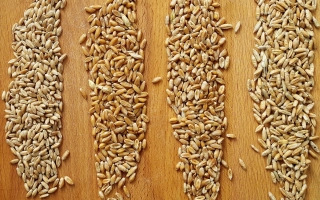
Often considered together with this variety




Recently viewed
Products you’ve viewed on this site
Reviews · 0