
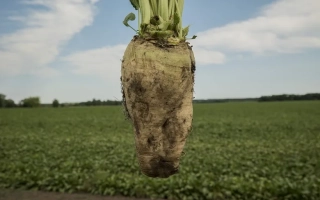

SKU #43593
·
30 views
Caveross
Sugar Beet
KWSUser rating
0 votes0% positive reviews
No ratings yet — be the first.
Root; shape
Oval-conical
Registration year
1998
About product

A high-performance hybrid with strong disease resistance, designed for stable sugar yields and efficient harvesting.
Root; shape
Oval-conical
Registration year
1998
Description
Phytosanitary Resilience in Sugar Beet
The «Kaveros» sugar beet hybrid from KWS Saat represents a robust breeding achievement designed for growers who prioritize field performance and disease mitigation. In an era where fungal pressure is increasingly impacting bottom lines, KWS offers a genetics-first approach to crop protection.
Why Kaveros Stands Out
- Superior Disease Tolerance: The hybrid shows excellent resistance to Cercospora leaf spot, Ramularia, and powdery mildew. By keeping the foliage active and healthy well into the autumn, the plant ensures sustained sucrose accumulation.
- Optimized Root Geometry: The oval-conical shape of the root is engineered for harvesting efficiency. It provides enough surface area for nutrient uptake while remaining easy to lift mechanically, significantly reducing soil tare and harvesting losses.
Operational Fit
«Kaveros» is best suited for intensive management systems. It is not designed to be a low-input, "set-and-forget" crop; rather, it performs best when provided with a balanced nutritional program. It is an excellent choice for farmers who are tired of managing complex, overlapping spray schedules for fungal diseases and need a variety that can handle a high infection pressure without constant intervention.
Key Considerations
Success with «Kaveros» relies on precision sowing. Because the hybrid focuses on developing a significant root mass, overcrowding must be avoided to prevent intra-crop competition. Following KWS guidelines for plant density is crucial to ensure both optimal sugar content and root size. While it excels in disease resilience, it still demands quality soil management to reach its true potential as a top-tier performer in the sugar beet sector.
Crop & resistance
Crop
Disease resistance
Specifications hover over for a hint about the specification
|
Root; shape
Root; shape
Roots can be round, elongated-round, cylindrical, conical. |
|
|---|---|
| Registration year | 1998 |
| Catalog | Catalog → Sugar Beet |
| Manufacturer | KWS |
| Legal data | |
| Country | Germany |
Store offers
Prices are updated on loadLoading offers…
Aggregator catalog: prices are collected automatically from store websites, normalized by AI and converted at the current exchange rate. Before ordering, confirm the price and availability on the store's website. This block is not indexed by search engines — the data is loaded after the page opens.
Not yet комментариев. Be the first!
Alternatives
Sugar beet seeds · similar varieties




See also
Often considered together with this variety




Recently viewed
Products you’ve viewed on this site
Reviews · 0