


SKU #67546
·
37 views
Kleopatra
Raspberry
User rating
0 votes0% positive reviews
No ratings yet — be the first.
Ripening Period
Medium
Berry Color
Red
Berry Shape
Conical
Berry weight (g)
2-3
About product

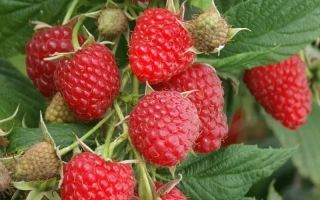
The Cleopatra raspberry variety is a mid-season, universal-purpose variety with a powerful, moderately spreading bush. The bushes are of medium height, upright or trailing, with moderate cane productivity. Two-year-old canes are brown with straight thorns that have a purple or brown base; the thorniness varies from weak to moderate. One-year-old canes are covered with a waxy bloom, hairless, with…
Ripening Period
Medium
Berry Color
Red
Berry Shape
Conical
Berry weight (g)
2-3
Description
The Cleopatra raspberry variety is a mid-season, universal-purpose variety with a powerful, moderately spreading bush. The bushes are of medium height, upright or trailing, with moderate cane productivity. Two-year-old canes are brown with straight thorns that have a purple or brown base; the thorniness varies from weak to moderate. One-year-old canes are covered with a waxy bloom, hairless, with varying amounts of thorns concentrated mainly at the base. Leaves are dark green, medium to large in size, wrinkled, with sharp teeth along the edges, weakly or completely hairless.
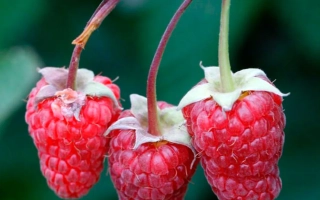
The Cleopatra variety's berries are of medium size, weighing from 2.7 to 3.6 grams, widely conical or conical in shape, dark red or red in color. The flesh is tender, sour-sweet with a light aroma. Sugar content in the berries ranges from 5.9 to 7.2%, acidity is about 2.3–2.4%, and vitamin C reaches 19.8–30.1 mg%. The taste evaluation is in the range of 4.2–4.6 points, indicating good fruit quality.
The variety is characterized by good winter hardiness, withstanding temperatures down to -33°C, as well as moderate heat tolerance and drought resistance. It exhibits high resistance to diseases and pests, reducing the need for intensive plant protection. To obtain a high yield, it is recommended to grow Cleopatra in sunny locations with fertile soil. The average yield of the variety is about 50–56 centners per hectare, making it attractive for cultivation in the central region.
The Cleopatra variety's berries are of medium size, weighing from 2.7 to 3.6 grams, widely conical or conical in shape, dark red or red in color. The flesh is tender, sour-sweet with a light aroma. Sugar content in the berries ranges from 5.9 to 7.2%, acidity is about 2.3–2.4%, and vitamin C reaches 19.8–30.1 mg%. The taste evaluation is in the range of 4.2–4.6 points, indicating good fruit quality.
The variety is characterized by good winter hardiness, withstanding temperatures down to -33°C, as well as moderate heat tolerance and drought resistance. It exhibits high resistance to diseases and pests, reducing the need for intensive plant protection. To obtain a high yield, it is recommended to grow Cleopatra in sunny locations with fertile soil. The average yield of the variety is about 50–56 centners per hectare, making it attractive for cultivation in the central region.
Video · 1 video
Suggest a video →Specifications hover over for a hint about the specification
|
Ripening Period
Ripening Period
It takes 70-100 days until pepper reaches flowering stage, 130-160 days until technical fruit ripeness, and 135-180 days until physiological ripeness. |
Medium |
|---|---|
| Berry Color | |
| Berry Shape | |
| Berry weight (g) | 2-3 |
| Flavor | |
| Barkiness of branches | |
| Cold Resistance | |
| Registration year | 2017 |
| Catalog | Catalog → Raspberry |
| Legal data |
Show · 1 |
| Country | Russia |
Store offers
Prices are updated on loadLoading offers…
Available at: Сад от А до Я
Aggregator catalog: prices are collected automatically from store websites, normalized by AI and converted at the current exchange rate. Before ordering, confirm the price and availability on the store's website. This block is not indexed by search engines — the data is loaded after the page opens.
Not yet комментариев. Be the first!
Alternatives
Raspberry saplings · similar varieties





See also
Often considered together with this variety




Recently viewed
Products you’ve viewed on this site
Reviews · 0